
Skip to content
Yannis MygdanisYannis MygdanisMusic educatorResearcherComposer
Designer of educational applications

University course design

Design and teaching of undergraduate and postgraduate music education courses. Descriptions, learning outcomes and available resources for each course.

5Courses
4Undergraduate
1Postgraduate

5 courses

Undergraduate courses

4 courses
4.

National & Kapodistrian University of Athens Department of Music Studies

Winter semester [Μ348] Fifth-specialisation elective (Κ5ΕΠΙ) Independent teaching 4 ECTS

Course description

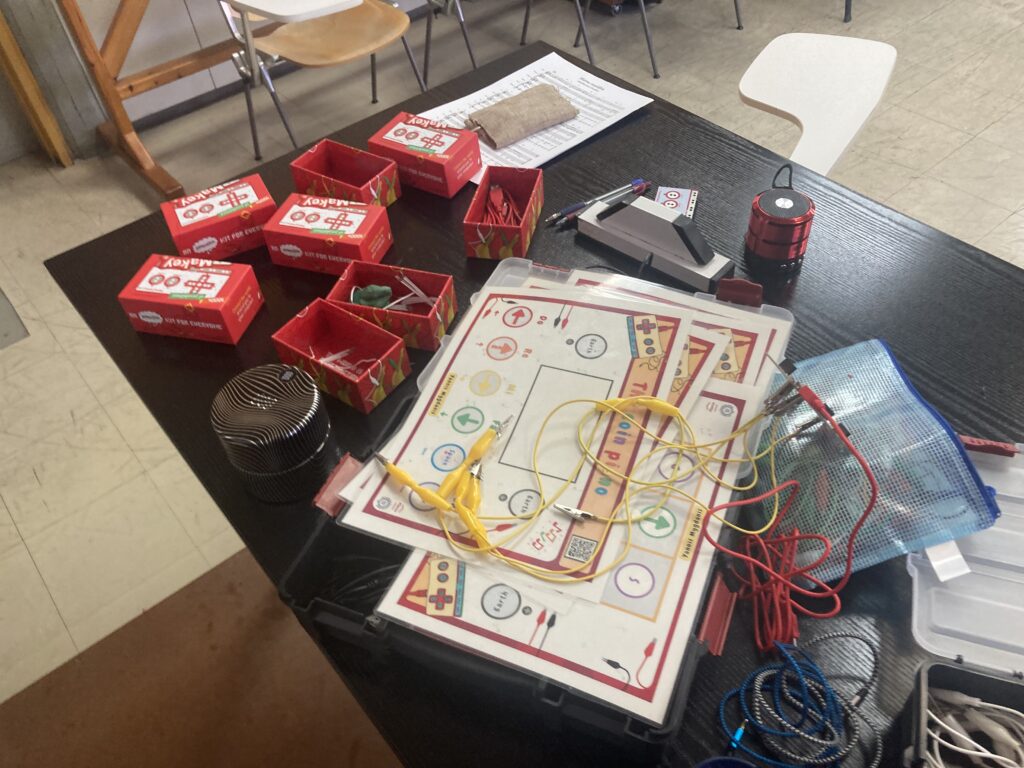
The course combines the principles of STEAM education (Science, Technology, Engineering, Arts, and Mathematics) with the pedagogical use of emerging technologies, focusing on enhancing music learning and practice through interdisciplinary approaches. The thematic areas include classroom practices in music creation and production, the design of teaching scenarios within the framework of the Maker Movement, and the pedagogical integration of emerging technologies. More specifically, the course examines the integration of creative coding, the use of virtual, augmented, and mixed reality environments (VR/AR/MR), interactive interfaces, and artificial intelligence systems in music education. Particular emphasis is placed on connecting these technologies with instructional design, creativity, experimentation, and musical practice. Teaching is delivered through lectures, laboratory exercises, interactive activities, and group projects, linking theoretical frameworks with practical application. Throughout the course, students design and develop educational activities and digital STEAM music education artefacts using appropriate emerging technologies. Students are assessed through:

  • three laboratory exercises and small hands-on projects involving the design and development of STEAM activities and artefacts: 15%,
  • a final individual or group project and presentation, involving the design of a complete STEAM educational scenario that incorporates the hands-on projects developed during the course: 25%,
  • written examinations: 60%.
Learning outcomes

Upon successful completion of the course, students will be able to:

  • analyse the fundamental principles of STEAM education and the contribution of emerging technologies to contemporary music pedagogy,
  • apply interdisciplinary approaches to the design of music learning activities and teaching scenarios,
  • use creative coding, interactive interfaces, virtual, augmented, and mixed reality environments, and artificial intelligence systems in music education contexts,
  • design experiential and hands-on activities based on the principles of the Maker Movement and design thinking,
  • develop digital music education materials and artefacts that integrate STEAM principles and emerging technologies,
  • evaluate the pedagogical suitability, functionality, and learning value of digital applications and educational materials for music education.
3.

National & Kapodistrian University of Athens Department of Music Studies

Winter semester [Μ347] Fifth-specialisation elective (Κ5ΕΠΙ) Independent teaching

Course description

The course provides students with the theoretical knowledge and practical skills required to design, develop, and evaluate music educational materials within contemporary digital environments in music pedagogy. It examines fundamental principles of educational technology, learning theories, and instructional design approaches, with particular emphasis on their connection to educational needs, learning objectives, and the specific processes involved in music teaching and learning. In practice, the course focuses on the use of digital tools and software to design and develop interactive and multimedia music educational objects and resources. Students engage, among other activities, in creating infographics, educational videos, and interactive applications, as well as developing educational activities and augmented reality environments. Particular emphasis is placed on the organization and multimodal presentation of musical content, interaction design, and the pedagogical evaluation of the materials produced. The development of educational materials is adapted to different teaching contexts and fields of application, enabling students to connect instructional design with diverse educational needs and music pedagogical practices. Teaching is delivered through lectures, laboratory exercises, group assignments, interactive activities, and presentations, systematically linking theoretical frameworks with the practical design and development of music educational materials. Students are assessed through:

  • three laboratory exercises in the form of small hands-on projects involving the design and development of educational materials: 15%,
  • a final individual or group project and presentation, involving either (a) the design and development of complete music educational software or (b) the instructional design of a lesson based on the materials created during the laboratory exercises: 25%,
  • written examinations: 60%.
Learning outcomes

Upon successful completion of the course, students will be able to:

  • understand the fundamental principles of instructional design in music education,
  • analyse educational needs and connect learning theories with processes of music teaching and learning,
  • use contemporary digital tools and software to create music educational materials,
  • design and develop interactive and multimedia music education objects,
  • adapt the materials produced to different educational contexts and fields of teaching application,
  • evaluate the pedagogical effectiveness and suitability of music educational materials in musical practice.
2.

National & Kapodistrian University of Athens Department of Music Studies

Spring semester [Μ349] Fifth-specialisation elective (Κ5ΕΠΙ) Independent teaching 3 ECTS

Course description

The course focuses on the organization and pedagogical use of music ensembles that combine digital media, innovative technologies, and non-conventional forms of musical interaction with conventional instruments and instruments used in music education. Within this framework, students engage with music software, augmented reality technologies, body-tracking systems, haptic and interactive interfaces, and artificial intelligence applications, alongside instruments such as the ukulele, recorder, ocarina, and Boomwhackers. The course examines issues related to the organization and coordination of such music groups, the implementation of differentiated teaching approaches, and the selection of context-appropriate strategies for arranging and integrating digital and conventional media into music education. Particular emphasis is placed on creating inclusive learning environments and adapting musical practice to participants' abilities, needs, and varying levels of experience. The course explores expanded forms of musical creativity, collaboration, and innovation, as well as new modes of musical expression through the lens of contemporary digital and multimodal music literacies. Teaching combines theoretical and practical approaches, laboratory exercises, experiential music-making activities, and group projects, enabling students to apply different strategies for organizing, arranging, and teaching mixed music ensembles in practice. Students are assessed through:

  • Mini Project I – Creation of digital music education material (20%): design and development of a music education instrument for different educational contexts, incorporating digital technologies, together with the creation of supporting visual material for its integration into the educational process.
  • Mini Project II – Practical arrangement of a musical piece (20%): development of an arrangement for a music ensemble using conventional and non-conventional instruments and its adaptation to different educational contexts.
  • Final assignment – Comprehensive teaching of a musical piece in music ensembles (60%): design of a complete teaching application that includes the educational context, objectives, strategies, methods, and assessment, incorporates differentiated teaching approaches, and concludes with an online presentation.
Learning outcomes

Upon successful completion of the course, students will be able to:

  • organize and coordinate music ensembles that combine digital media with conventional instruments or instruments used in music education,
  • use digital technologies and interactive systems in group music activities,
  • apply differentiated teaching approaches according to participants' needs, abilities, and levels of experience,
  • design and adapt arrangements for mixed music ensembles using different means of sound production and control,
  • design inclusive learning environments that broaden opportunities for participation in collective music-making,
  • use contemporary digital and multimodal music literacies to develop new forms of musical creativity, expression, and collaboration,
  • design and implement mixed-ensemble activities in formal and informal educational contexts.
1.

National & Kapodistrian University of Athens Department of Music Studies

Spring semester [Μ352] Fifth-specialisation elective (Κ5ΕΠΙ) Independent teaching 4 ECTS

Course description

Popular music constitutes a complex, multidimensional, and polysemic cultural field. The course approaches popular music through multimodal analysis, with particular emphasis on the interconnected domains of production, distribution, and consumption. It examines issues related to mass culture, musical and social identities, everyday life and social relationships, artistic personas and vocal expression, musical genres, song structure, and the role of technology in the creation, mediation, and reception of popular music. Using the tripartite framework of description–analysis–interpretation with representative examples of popular songs, students explore the multiple connotations and sociocultural contexts that emerge through the interaction of music, lyrics, image, and performance. Particular emphasis is placed on understanding popular songs and music videos as multimodal texts. The course aims to provide students with theoretical and analytical tools that they can incorporate into their future teaching practice in formal and informal learning environments, enabling them to develop educational approaches that take into account students' musical experiences, preferences, and contemporary cultural literacies. Students are assessed through:

  • up to three optional mini-projects (bonus of up to 15%), which may include:
    • analyses of selected popular songs using the description–analysis–interpretation framework,
    • group projects involving the creation and multimodal editing of music videos,
    • the design of teaching scenarios for the use of popular songs and multimodal musical content in educational environments,
  • a written examination (60%) covering the theoretical and analytical approaches examined during the course,
  • an individual written assignment (40%) involving the multimodal analysis of a music video using the theoretical concepts and analytical tools of the course.
Learning outcomes

Upon successful completion of the course, students will be able to:

  • understand key theoretical approaches to the study of popular music as a multimodal and sociocultural phenomenon,
  • analyse popular songs through the tripartite framework of description–analysis–interpretation,
  • explore relationships among music, lyrics, image, vocal expression, and performance,
  • identify and interpret social and cultural connotations related to identity, musical genre, artistic persona, and mass culture,
  • analyse music videos as multimodal texts and evaluate the role of different semiotic modes in meaning-making,
  • create musical and audiovisual content using principles of multimodality,
  • design teaching activities and scenarios centred on popular music and adapted to formal and informal learning environments,
  • integrate students' musical experiences, preferences, and contemporary cultural literacies into educational design.

Postgraduate courses

1 course
1.

National & Kapodistrian University of Athens Department of Music Studies

First semester (Winter) [Μ356] 10 ECTS MA – Music Education in Formal & Informal Environments

Course description

The course examines contemporary digital music technology and the ways its tools can be used in music education and music creation in both formal and informal contexts. Its thematic areas include digital technology in education and, more specifically, in music education, digital notation in relation to creativity, recording and mixing software, acoustic configuration of space, and the use of music technology equipment. It also addresses the organization of a school concert as part of an introduction to tools with applications in music education and music creation.