Toccata for pianoforte
Piano work
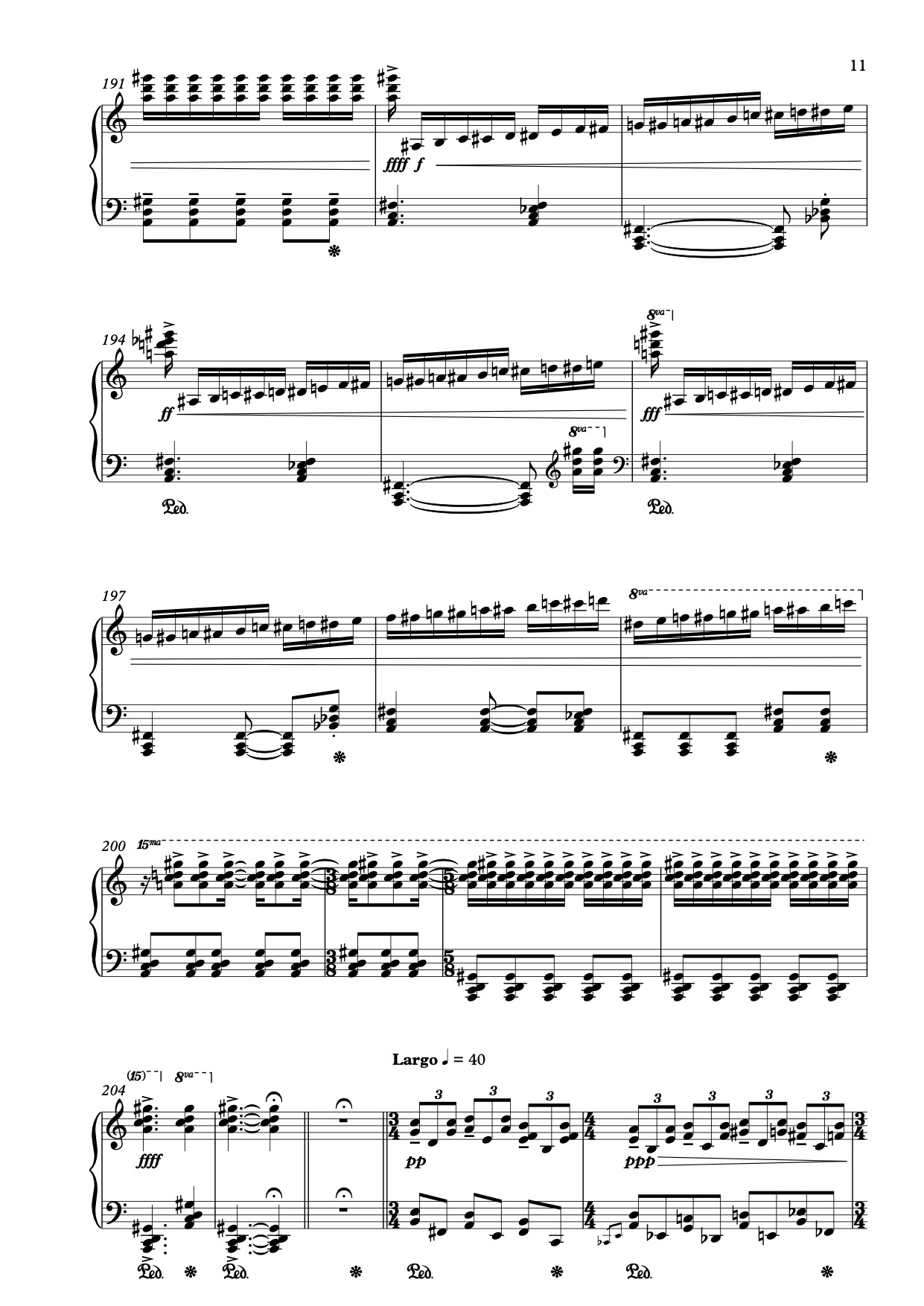
A solo piano work shaped by an ongoing conflict between anger and melancholy. Images and memories sometimes connect and sometimes abruptly interrupt the musical flow. Sudden dynamic changes, dissonant intervals and rhythmic shifts express this inner tension without a final resolution.
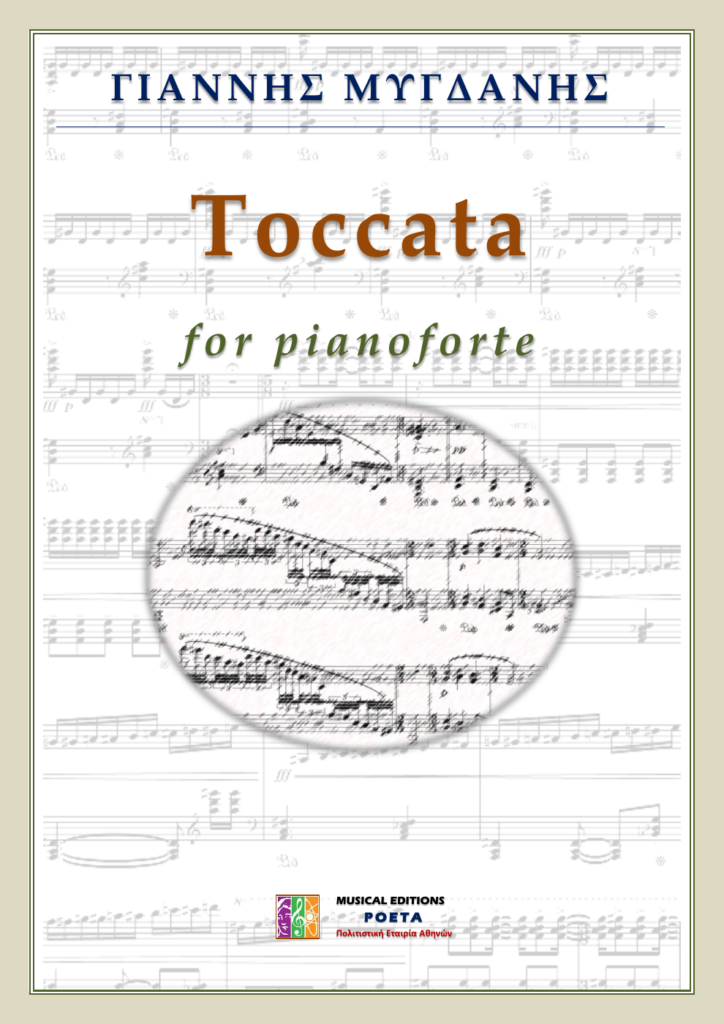
Work details
Book edition
- Publisher
- Poeta Musical Editions — Cultural Society of Athens
- Contribution
- Composition
- ISMN
- 979-0-9016038-4-4
- Publication year
- 2017
Inside the book
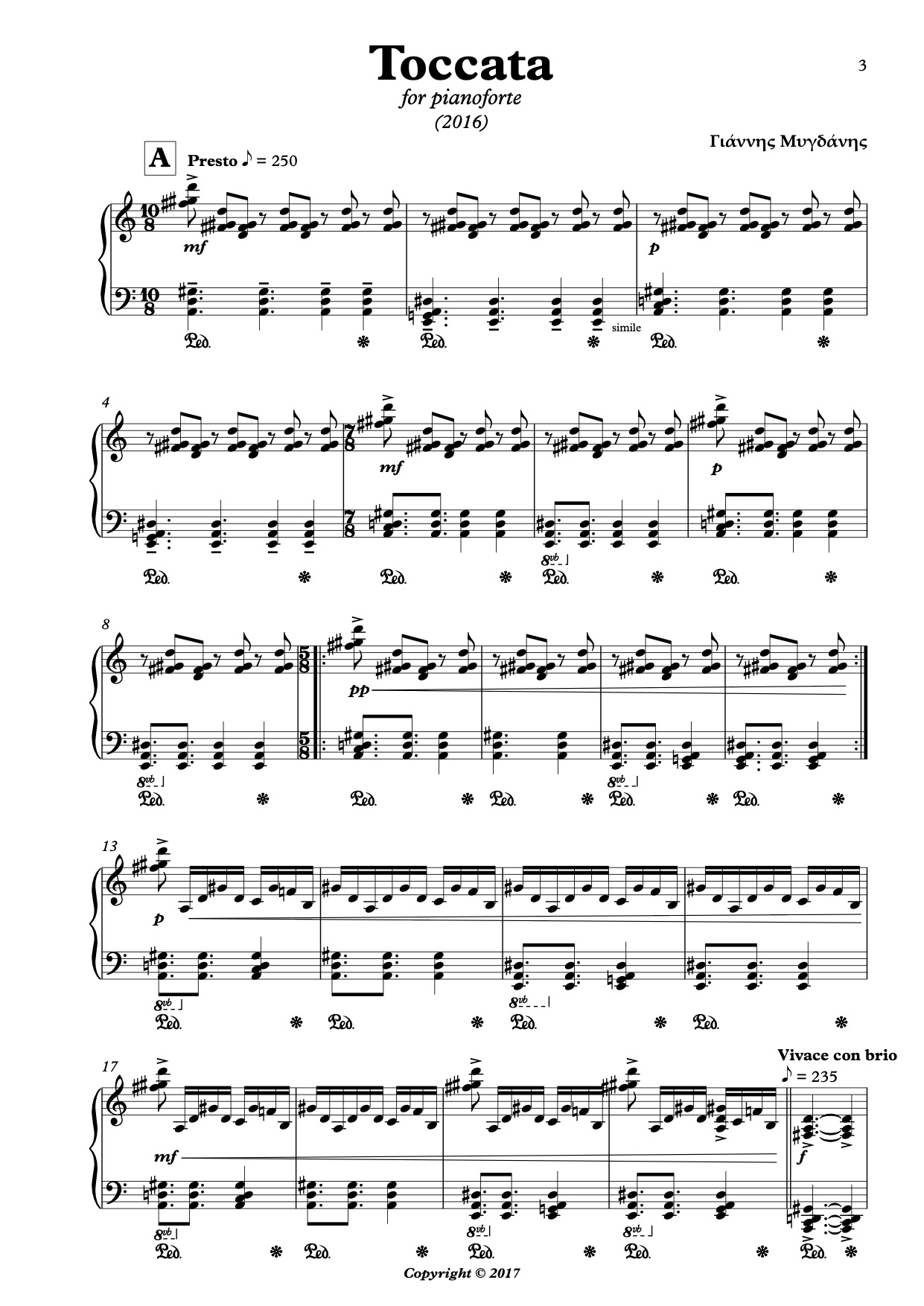
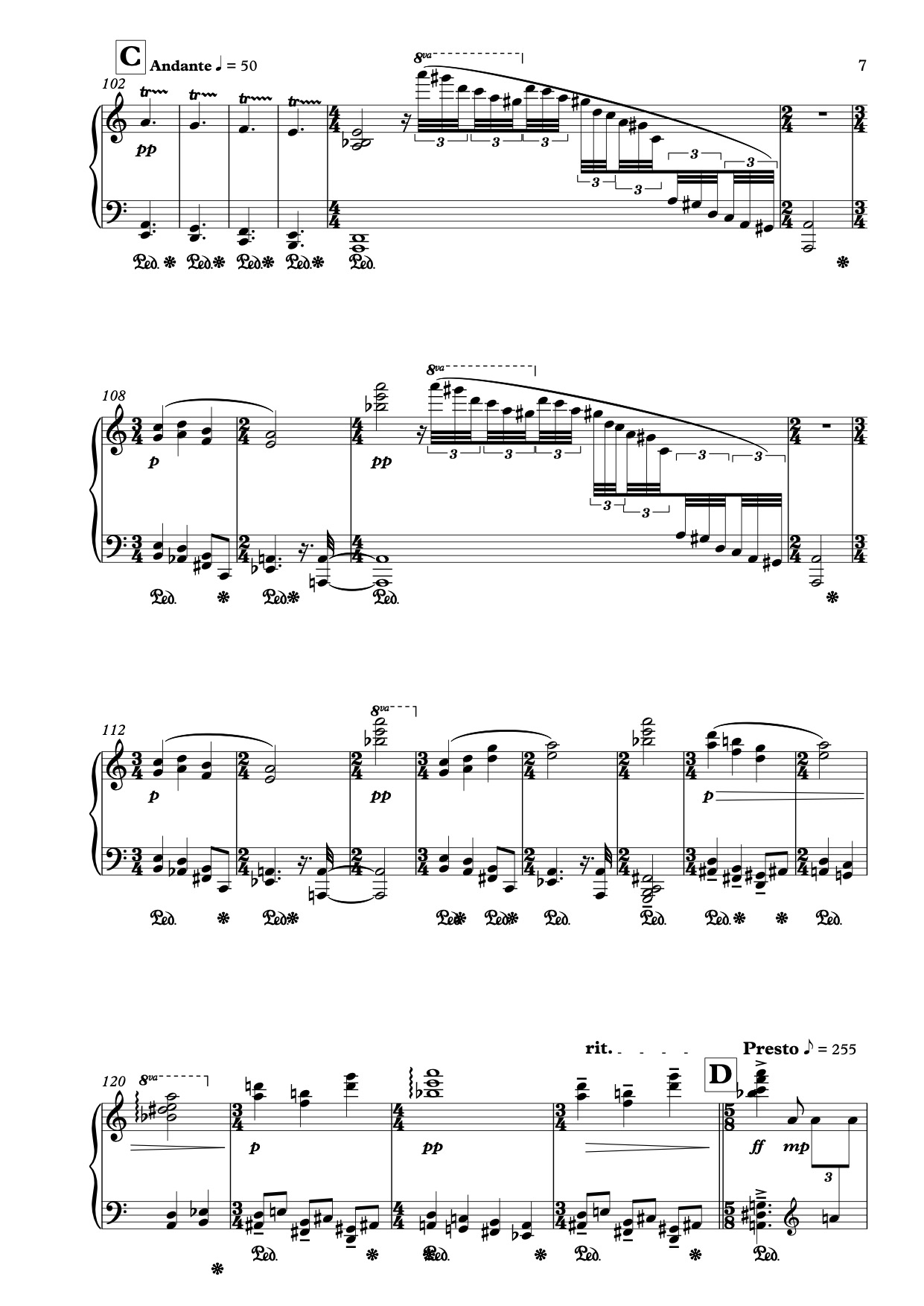
Programme note
Toccata for pianoforte was completed in late 2016. It brings together closely connected images, thoughts and moods, reflecting the composer’s emotional intensity without a fixed beginning or end. At times these thoughts form a continuous sequence; at others, memories intrude unexpectedly and forcefully, interrupting coherence and the train of thought.
The whole structure is a perpetual battle of emotions and an attempt to impose one state upon another. Rage, allied with intensity, tries to overcome the slow disposition of melancholy. The work balances between these opposing states, which share one element: memories of the past. One is sadness and melancholy over unfulfilment; the other is anger and rage, erupting rhythmically and harmonically through abrupt dynamic changes and dissonant intervals, unable to moderate its momentum. Their alternation is only apparent. It is not a dialogue: each opponent gains time to recover and attack again. The battle never ends, and no victor emerges.
At the end comes a possibly liberating outburst of rage. Before it can be grasped, melancholy returns and makes its presence felt again. Rage becomes anger trying to escape, but the rhythm has changed and it is exhausted. It offers one final resistance, knowing what lies ahead, and then grows calm.
Yannis Mygdanis
Marousi, July 2017