Καταχώριση της έρευνας στο ΕΚΠΑ
Στοιχεία ολοκλήρωσης, περίληψη και σχετικές δημοσιεύσεις στον ιστότοπο του Εργαστηρίου Μουσικής Παιδαγωγικής.
ΠροβολήΜουσική εκπαίδευση 4.0: προς ένα ανθρωποκεντρικό μετα-ψηφιακό παιδαγωγικό μοντέλο μουσικής διδασκαλίας και μάθησης με αξιοποίηση αναδυόμενων και εμβυθιστικών τεχνολογιών, τεχνητής νοημοσύνης και STREAM εκπαίδευσης
Η μεταδιδακτορική έρευνα στο Τμήμα Μουσικών Σπουδών του ΕΚΠΑ εξετάζει τη συγκρότηση ενός ανθρωποκεντρικού, μετα-ψηφιακού παιδαγωγικού μοντέλου «Μουσικής Εκπαίδευσης 4.0». Συνδέει τη μουσική παραγωγή, το maker movement, τη δημιουργική κωδικοποίηση, την εικονική και επαυξημένη πραγματικότητα και την τεχνητή νοημοσύνη με τον σχεδιασμό και την έρευνα μαθησιακών περιβαλλόντων STREAM στην πρωτοβάθμια εκπαίδευση. Η μεταδιδακτορική έρευνα ολοκληρώθηκε τον Σεπτέμβριο του 2025.

Φιλοσοφική Σχολή · Τμήμα Μουσικών Σπουδών
Μεταδιδακτορική έρευνα στη Μουσική Παιδαγωγική2023–2025
Οι τεχνολογικές εξελίξεις των τελευταίων ετών επαναπροσδιορίζουν συνεχώς τις μορφές που τα άτομα έρχονται σε επαφή με τη μουσική, διαμορφώνοντας νέες προοπτικές μουσικής έκφρασης, αλληλεπίδρασης και μάθησης. Τα παιδιά στη σύγχρονη ψηφιακή εποχή μεγαλώνουν σε ένα περιβάλλον που διευρύνει καθημερινά τις μουσικές εμπειρίες και προτιμήσεις τους. Αυτό έχει ως αποτέλεσμα, οι αντιλήψεις για τη μουσική πράξη να μετασχηματίζονται και να αποκτούν νέα νοήματα μέσα από τη χρήση των ψηφιακών μέσων, δημιουργώντας παράλληλα και νέες προκλήσεις για τη μουσική παιδαγωγική. Οι ταχείες αυτές εξελίξεις καθιστούν απαραίτητη τη σχεδίαση μαθησιακών περιβαλλόντων σε ένα πλαίσιο ριζικά διαφορετικό από το συμβατικό.
Η παρούσα έρευνα επικεντρώνεται στους τρόπους με τους οποίους αναδύονται και διαμορφώνονται περιβάλλοντα μάθησης στο πλαίσιο της αναδυόμενης θεωρίας «Μουσικής Εκπαίδευσης 4.0». Κύριος στόχος είναι η σχεδίαση, η ανάπτυξη και η εφαρμογή διδακτικών σεναρίων για την πρωτοβάθμια εκπαίδευση, τα οποία αντανακλούν την προοπτική του δια-επιστημονικού μοντέλου STREAM (Science, Technology, Reading/wRiting, Engineering, Arts, Mathematics). Η μελέτη προσεγγίζει την εμπειρία μαθητών/τριών της Γ’ έως Ε’ τάξης του δημοτικού και αναλύει τη χρήση αναδυόμενων τεχνολογιών (πρακτικές μουσικής παραγωγής, διάχυτος μουσικός υπολογισμός, κινητός υπολογισμός, δημιουργική κωδικοποίηση), τεχνολογιών εμβύθισης (εικονική και επαυξημένη πραγματικότητα) και τεχνητής νοημοσύνης σε αυτά τα μαθησιακά μουσικά περιβάλλοντα.
Η έρευνα υλοποιήθηκε υπό τη μορφή ομίλου μουσικής στο δημοτικό σχολείο του Pierce – The American College of Greece και έλαβε χώρα σε τρία διαδοχικά σχολικά έτη, με 30 εβδομάδες παρέμβασης ανά έτος. Ο μεθοδολογικός σχεδιασμός βασίστηκε στην προσέγγιση της έρευνας σχεδιασμού (Design-Based Research), εστιάζοντας στη δημιουργία και διαρκή βελτίωση αυθεντικών μαθησιακών περιβαλλόντων. Οι μαθητές/τριες συμμετείχαν ενεργά σε δραστηριότητες που ενίσχυσαν τη δημιουργική τους έκφραση, την αυτονομία, την αυτορρύθμιση, την αισθητηριακή εμπλοκή και τη συνεργατική επίλυση προβλημάτων, ενώ καλλιέργησαν ικανότητες υπολογιστικής σκέψης στη βάση της δημιουργικής αξιοποίησης φυσικών και ψηφιακών μέσων στις διαδικασίες μουσικής διδασκαλίας-μάθησης.
Η αναδυόμενη θεωρία «Μουσική Εκπαίδευση 4.0» δεν εισήχθη ως προκαθορισμένο θεωρητικό μοντέλο, αλλά συγκροτήθηκε δυναμικά μέσα από τη σπειροειδή διεργασία σχεδιασμού, εφαρμογής και αναστοχασμού. Αποτέλεσε έτσι το απώτερο προϊόν της ερευνητικής πράξης, προτείνοντας ένα παιδαγωγικά τεκμηριωμένο και ανθρωποκεντρικά προσανατολισμένο και μετα-ψηφιακό πλαίσιο μουσικής διδασκαλίας, μία «μετατόπιση παραδείγματος», συμβατή με τις προκλήσεις και τις νέες διευρυμένες δυνατότητες του σύγχρονου ψηφιακού μουσικού συμφραζόμενου.
Σκοπός της μελέτης είναι η ανάπτυξη και υλοποίηση της διδακτικής παρέμβασης «Digital Little Music Makers» και η διερεύνηση της μετασχηματιστικής δυναμικής και της προστιθέμενης παιδαγωγικής αξίας των αναδυόμενων και εμβυθιστικών τεχνολογιών. Η σταδιακή συγκρότηση της «Μουσικής Εκπαίδευσης 4.0» προκύπτει μέσα από τη σχέση σχεδιασμού, εφαρμογής και αναστοχασμού στο αυθεντικό σχολικό περιβάλλον.
Εξετάζονται οι στόχοι, η δομή, το περιεχόμενο, η αξιολόγηση και τα παιδαγωγικά εργαλεία των σεναρίων, καθώς και οι τρόποι διαφοροποίησης του μοντέλου από προηγούμενες γενιές μουσικής εκπαίδευσης.
Διερευνώνται τα μαθησιακά οφέλη ως προς τη δημιουργικότητα, τη συνεργασία και την ενεργό μάθηση, αλλά και η αποτίμηση της εμπειρίας από τα ίδια τα παιδιά μέσα από τις αφηγήσεις τους.
Εξετάζονται η παιδαγωγική αξιοποίηση της μουσικής παραγωγής, του maker movement, της κωδικοποίησης, της τεχνητής νοημοσύνης και των τεχνολογιών εμβύθισης, καθώς και οι διδακτικές πρακτικές και τα μαθησιακά οφέλη που αναδύονται.
Η μελέτη εντάσσεται στην ποιοτική, ερμηνευτική και κοινωνικοκονστρουκτιβιστική προοπτική και αξιοποιεί την Έρευνα Σχεδιασμού (Design-Based Research — DBR). Ο σχεδιασμός λειτουργεί ως μέσο διερεύνησης και μετασχηματισμού της διδακτικής πράξης. Τα σχήματα του Edelson και των McKenney και Reeves υποστηρίζουν την οργάνωση της επαναληπτικής πορείας, από την ανάλυση του πλαισίου έως την ωρίμανση των σχεδιαστικών αρχών.
Το 2022–2023 διαμορφώνεται και εφαρμόζεται το πρώτο πρωτότυπο, με άξονες τη μουσική παραγωγή, τη μουσική κωδικοποίηση και τον διάχυτο μουσικό υπολογισμό. Το 2023–2024, η ανατροφοδότηση οδηγεί σε ανασχεδιασμό και διεύρυνση με VR, AR και τεχνητή νοημοσύνη, καθώς και σε ενίσχυση της προοπτικής STREAM. Το 2024–2025, τα δεδομένα των προηγούμενων κύκλων τροφοδοτούν πιο ώριμα σενάρια και τη σταδιακή συγκρότηση σχεδιαστικών αρχών και θεωρητικών σχημάτων.
Συλλέγονται παρατηρήσεις και ημερολόγια πεδίου, ημιδομημένες συνεντεύξεις, άτυπες συζητήσεις και τεχνουργήματα των παιδιών σε ατομικά και ομαδικά portfolios. Η οπτική εξωτερικού παρατηρητή και κριτικού φίλου ενισχύει τον αναστοχασμό. Η διασταύρωση των πηγών συνδέει τις μαθητικές εμπειρίες, τις δημιουργίες και τις παρατηρήσεις με τα ερευνητικά ερωτήματα.
Το υλικό οργανώνεται, ψηφιοποιείται και κωδικοποιείται με θεματική ανάλυση περιεχομένου και υποστήριξη του ATLAS.ti 8. Η ερμηνεία ακολουθεί επαναληπτική και αναστοχαστική πορεία, συσχετίζοντας τα μοτίβα μεταξύ των τριών κύκλων. Η τελική σύνθεση αποβλέπει σε παιδαγωγικά τεκμηριωμένες σχεδιαστικές αρχές με δυνατότητα αξιοποίησης σε ανάλογα περιβάλλοντα, λαμβάνοντας υπόψη τις συνθήκες κάθε πλαισίου.
Η παρέμβαση υλοποιείται στον προαιρετικό μουσικό όμιλο του Δημοτικού Pierce – The American College of Greece κατά τα σχολικά έτη 2022–2023, 2023–2024 και 2024–2025, με τριάντα εβδομάδες παρέμβασης ανά έτος. Στην τριετή πορεία συμμετέχουν συνολικά σαράντα έξι μαθητές και μαθήτριες, κυρίως Γ΄ έως Ε΄ τάξης, με είκοσι έως είκοσι τρία παιδιά ανά σχολική χρονιά.
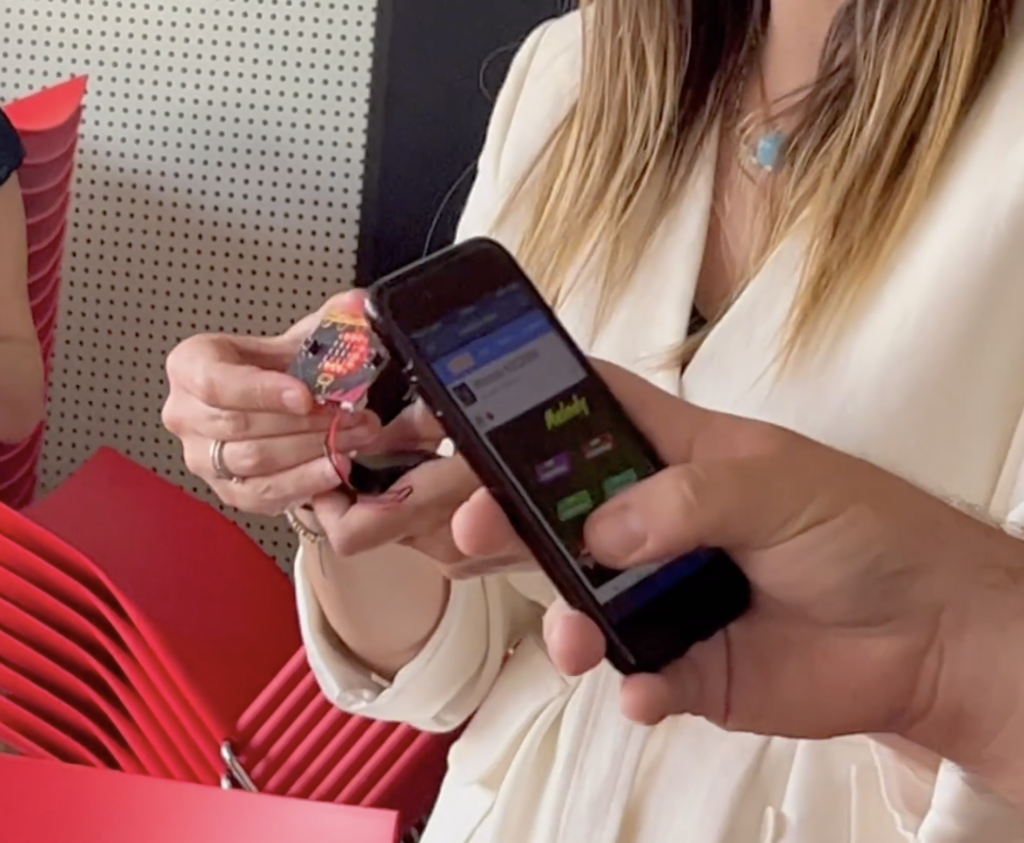
Τα παιδιά εργάζονται ατομικά και σε ομάδες, αναλαμβάνοντας δημιουργικά έργα που συνδέουν τον ήχο με την κατασκευή, την αφήγηση, τον προγραμματισμό και την εμβύθιση. Η μουσική παραγωγή και η δημιουργία ηχητικών συνθέσεων συνυπάρχουν με απτικές διεπαφές, δημιουργική κωδικοποίηση, εικονική και επαυξημένη πραγματικότητα και εργαλεία τεχνητής νοημοσύνης. Η προοπτική STREAM συνδέει τις φυσικές επιστήμες, την τεχνολογία, την ανάγνωση και γραφή, τη μηχανική, τις τέχνες και τα μαθηματικά με τη μουσική πράξη.
Ο σχεδιασμός προσαρμόζεται στα ενδιαφέροντα και στις ανάγκες των μαθητών/τριών. Τα ατομικά και ομαδικά portfolios περιλαμβάνουν μουσικές συνθέσεις, ηχητικά κολάζ, ψηφιακές εφαρμογές και εικαστικές απεικονίσεις και λειτουργούν ως αρχεία μάθησης, αυτοαξιολόγησης και αναστοχασμού.
Αναπτύσσεται και αναθεωρείται ένα σύνολο διδακτικών σεναρίων «Digital Little Music Makers», το οποίο συνδυάζει μουσική παραγωγή, διάχυτο μουσικό υπολογισμό, δημιουργική κωδικοποίηση, VR, AR και τεχνητή νοημοσύνη. Η περιγραφή των εφαρμογών και η τεκμηρίωση της ερευνητικής πορείας αποτυπώνουν τη μετάβαση από τον αρχικό σχεδιασμό στην αναστοχαστική βελτίωση.
Οι μουσικές συνθέσεις, τα ηχητικά κολάζ, οι ψηφιακές εφαρμογές και οι εικαστικές απεικονίσεις συγκροτούν τεκμήρια της δημιουργικής και μαθησιακής πορείας. Τα portfolios επιτρέπουν τη μελέτη της εξέλιξης των έργων, των μαθητικών επιλογών και της δημιουργικής αυτονομίας.
Το βασικό θεωρητικό προϊόν είναι ένα ανθρωποκεντρικό, μετα-ψηφιακό παιδαγωγικό πλαίσιο και οι σχεδιαστικές αρχές που προκύπτουν από την τριετή παρέμβαση. Το μοντέλο συγκροτείται μέσα από την ερευνητική πράξη, με έμφαση στη δημιουργικότητα, την αυτονομία και αυτορρύθμιση, την αισθητηριακή και ενσώματη εμπλοκή, τη συνεργατική επίλυση προβλημάτων και την υπολογιστική σκέψη.

Σμαράγδα Χρυσοστόμου
Καθηγήτρια Μουσικής Παιδαγωγικής και Διδακτικής, Τμήμα Μουσικών ΣπουδώνΕθνικό και Καποδιστριακό Πανεπιστήμιο Αθηνών
Στοιχεία ολοκλήρωσης, περίληψη και σχετικές δημοσιεύσεις στον ιστότοπο του Εργαστηρίου Μουσικής Παιδαγωγικής.
ΠροβολήΆρθρα του Γιάννη Μυγδάνη σε επιστημονικά περιοδικά, κεφάλαια σε συλλογικούς τόμους, εργασίες σε πρακτικά συνεδρίων και δημοσιευμένα διδακτικά σενάρια. Κάθε εγγραφή περιλαμβάνει τα βιβλιογραφικά στοιχεία και την περίληψη, με συνδέσμους προς τον εκδότη, το DOI ή το πλήρες κείμενο όπου είναι διαθέσιμα. Μπορείτε να αναζητήσετε τις δημοσιεύσεις ανά είδος ή έτος και να επιλέξετε προβολή τίτλου ή αναφοράς APA.
12 αποτελέσματα
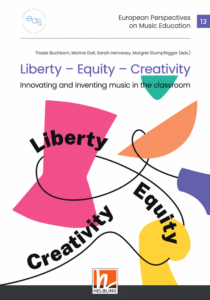
In T. Buchborn, M. Gall, S. Hennessy, & M. Stumpfögger (Eds.), Liberty–equity–creativity: Innovating and inventing music in the classroom (Vol. 13, pp. 207–220). Helbling.
Mygdanis, Y. (2025). Little music makers & producers: Designing and integrating technological-musical educational scenarios for musical creativity development in an elementary school in Greece. In T. Buchborn, M. Gall, S. Hennessy, & M. Stumpfögger (Eds.), Liberty–equity–creativity: Innovating and inventing music in the classroom (Vol. 13, pp. 207–220). Helbling.
Mygdanis, Y. (2025). Little music makers & producers: Designing and integrating technological-musical educational scenarios for musical creativity development in an elementary school in Greece. In T. Buchborn, M. Gall, S. Hennessy, & M. Stumpfögger (Eds.), Liberty–equity–creativity: Innovating and inventing music in the classroom (Vol. 13, pp. 207–220). Helbling. https://doi.org/10.25656/01:35270
In this chapter, the author presents the work he designed and implemented with his young students (aged 8–11 years), in which he used technological-musical educational scenarios for musical creativity development. As a teacher-researcher, he applied strategies and devised activities drawing on music production, maker movement, and music programming to foster the students' creativity. His research asks whether such activities promote musical creativity, and also investigates the children's evaluative responses. Findings are positive and support the author's interest in developing the research further with the aim of bringing these technologies into the music classroom more widely. This chapter is part of the anthology European Perspectives on Music Education, Volume 13, which addresses topics such as inclusive practices, the role of technology, and teacher education. (DIPF/Orig.)
Στο Ι. Σπαντιδάκης, Κ. Ντίνας, Β. Χατζηνικήτα, & Ε. Γρίβα (Επιμ.), Γλώσσα, Εκπαίδευση και Τεχνητή Νοημοσύνη (σσ. 845–856). Πανεπιστήμιο Κρήτης.
Μυγδάνης, Γ. (2025). Αξιοποίηση εργαλείων τεχνητής νοημοσύνης στην πρωτοβάθμια μουσική σχολική εκπαίδευση: Προκαταρκτικά ευρήματα από μία διδακτική παρέμβαση. Στο Ι. Σπαντιδάκης, Κ. Ντίνας, Β. Χατζηνικήτα, & Ε. Γρίβα (Επιμ.), Γλώσσα, Εκπαίδευση και Τεχνητή Νοημοσύνη (σσ. 845–856). Πανεπιστήμιο Κρήτης.
Μυγδάνης, Γ. (2025). Αξιοποίηση εργαλείων τεχνητής νοημοσύνης στην πρωτοβάθμια μουσική σχολική εκπαίδευση: Προκαταρκτικά ευρήματα από μία διδακτική παρέμβαση. Στο Ι. Σπαντιδάκης, Κ. Ντίνας, Β. Χατζηνικήτα, & Ε. Γρίβα (Επιμ.), Γλώσσα, Εκπαίδευση και Τεχνητή Νοημοσύνη (σσ. 845–856). Πανεπιστήμιο Κρήτης.
Οι ραγδαίες τεχνολογικές εξελίξεις των τελευταίων ετών έχουν μετασχηματίσει τους τρόπους με τους οποίους τα άτομα έρχονται σε επαφή με τη μουσική, διαμορφώνοντας νέες μορφές έκφρασης, δημιουργίας και μάθησης. Σε αυτό το πλαίσιο, η τεχνητή νοημοσύνη αποτελεί πλέον αναπόσπαστο κομμάτι της καθημερινότητας των ανθρώπων, επηρεάζοντας καταλυτικά τόσο τις διαδικασίες μουσικής διδασκαλίας και μάθησης όσο και τις πρακτικές μουσικής δημιουργίας. Το παρόν άρθρο συζητά τα αποτελέσματα από την αξιοποίηση εργαλείων τεχνητής νοημοσύνης σε δημιουργικές και συνθετικές στρατηγικές στην πρωτοβάθμια μουσική σχολική εκπαίδευση. Συγκεκριμένα, σε μια ομάδα είκοσι τριών παιδιών (Γ’ – Ε’ τάξης) στο δημοτικό σχολείο του Pierce – The American College of Greece και για περίοδο δέκα εβδομάδων, εφαρμόστηκαν διδακτικά σενάρια με έμφαση στην ένταξη των αναδυόμενων τεχνολογιών στη μουσική παραγωγή και δημιουργία. Στη βάση του δια-επιστημονικού μοντέλου STEAM, οι δράσεις διευρύνθηκαν με στοιχεία τεχνητής νοημοσύνης, αντλώντας από διαφορετικά γνωστικά πεδία. Για τη συλλογή των δεδομένων, αξιοποιήθηκαν τα ποιοτικά εργαλεία της συμμετοχικής παρατήρησης, άτυπες συζητήσεις με τα παιδιά, ομαδικές εστιασμένες συνεντεύξεις και γραπτές διαμορφωτικές αξιολογήσεις. Οι μαθητές φάνηκε να αγκαλιάζουν τις δραστηριότητες με ενθουσιασμό, ειδικά εκείνες που περιλάμβαναν τεχνητή νοημοσύνη, οι οποίες τους ενθάρρυναν να εξερευνήσουν νέους τρόπους έκφρασης και δημιουργίας. Από τα προκαταρκτικά ευρήματα παρατηρείται ότι η χρήση τέτοιων εργαλείων ενθαρρύνει τη συμμετοχή, βελτιώνει την κατανόηση μουσικών εννοιών, ενώ αναπτύσσει τη δημιουργικότητα και την υπολογιστική σκέψη. Ταυτόχρονα, οι μαθητές επέδειξαν σημαντική αντίληψη των ενδεχόμενων προκλήσεων της τεχνητής νοημοσύνης, τοποθετούμενοι κριτικά κυρίως σε ζητήματα διαφάνειας, αξιοπιστίας και ηθικής. Καταλήγοντας, τα αποτελέσματα της έρευνας παρέχουν σημαντικές ενδείξεις για τον δυνητικό ρόλο της τεχνητής νοημοσύνης σε μαθήματα μουσικής, διαμορφώνοντας παράλληλα νέες δυνατότητες αλλά και νέες προκλήσεις για το πεδίο της μουσικής παιδαγωγικής.
Journal of Culture in Tourism, Art and Education, 5(3), 80–90.
Μυγδάνης, Γ. (2025). Αξιοποιώντας πρακτικές τεχνητής νοημοσύνης στην πρωτοβάθμια μουσική εκπαίδευση: Παιδαγωγικές προοπτικές, STEAM εφαρμογές, δυνατότητες και περιορισμοί. Journal of Culture in Tourism, Art and Education, 5(3), 80–90.
Μυγδάνης, Γ. (2025). Αξιοποιώντας πρακτικές τεχνητής νοημοσύνης στην πρωτοβάθμια μουσική εκπαίδευση: Παιδαγωγικές προοπτικές, STEAM εφαρμογές, δυνατότητες και περιορισμοί. Journal of Culture in Tourism, Art and Education, 5(3), 80–90. https://doi.org/10.26220/cul.5464
Η Τεχνητή Νοημοσύνη (ΤΝ) αποτελεί μία από τις αναδυόμενες τεχνολογίες που διαμορφώνουν καθημερινά το εκπαιδευτικό τοπίο, αναδεικνύοντας νέες προοπτικές αλλά και προκλήσεις για τη μουσική διδασκαλία και μάθηση. Το παρόν άρθρο διερευνά τις δυνατότητες, τους περιορισμούς και τις παιδαγωγικές προεκτάσεις της ενσωμάτωσης πρακτικών ΤΝ στην πρωτοβάθμια μουσική εκπαίδευση, στο πλαίσιο μιας πολυτροπικής, δημιουργικής, συνεργατικής και βιωματικής προσέγγισης, βασισμένης στη φιλοσοφία του STEAM. Αξιοποιώντας εφαρμοσμένες πρακτικές από αυθεντικά σενάρια και εμπειρικές παρεμβάσεις και εντός μιας ανθρωποκεντρικής θεώρησης της ΤΝ, προτείνονται δραστηριότητες που αφορούν τη δημιουργία τεχνουργημάτων (όπως ηχοϊστορίες και podcast) με γλωσσικά μοντέλα, την αξιοποίησή της στη μουσική θεωρία και ιστορία, τη σχεδίαση διαδραστικών εφαρμογών με μηχανική μάθηση, την κατασκευή ψηφιακών μουσικών οργάνων, καθώς και την ανάπτυξη εμβυθιστικών ηχοτοπίων σε περιβάλλοντα εικονικής πραγματικότητας. Ιδιαίτερη έμφαση δίνεται στους περιορισμούς και στις ηθικές διαστάσεις της χρήσης ΤΝ, ιδίως στην αυθεντικότητα, στα ζητήματα πνευματικής ιδιοκτησίας και στη διαφάνεια των αλγορίθμων, καθώς και στην ανάγκη για κριτική στάση των μαθητών/τριών. Η ΤΝ προσεγγίζεται όχι ως αυτοσκοπός, αλλά ως αφορμή για την ενίσχυση και την επανανοηματοδότηση των πρακτικών διδασκαλίας και μάθησης στην πρωτοβάθμια μουσική εκπαίδευση.
Νέος Παιδαγωγός, 49, 239–264.
Μυγδάνης, Γ. (2025). Η Design-Based Research ως μετα-μεθοδολογική προοπτική στη Μουσική Παιδαγωγική για τη διασύνδεση θεωρίας, σχεδιασμού και πράξης. Νέος Παιδαγωγός, 49, 239–264.
Μυγδάνης, Γ. (2025). Η Design-Based Research ως μετα-μεθοδολογική προοπτική στη Μουσική Παιδαγωγική για τη διασύνδεση θεωρίας, σχεδιασμού και πράξης. Νέος Παιδαγωγός, 49, 239–264.
Το παρόν άρθρο διερευνά τη μεθοδολογική προσέγγιση της Design-Based Research (DBR) στο πλαίσιο της μουσικής εκπαίδευσης, εστιάζοντας τόσο στη φιλοσοφική και θεωρητική της συγκρότηση όσο και στις ερευνητικές πρακτικές που την καθιστούν ιδιαίτερα κατάλληλη για την ανάπτυξη εκπαιδευτικών καινοτομιών. Αρχικά, παρουσιάζονται οι βασικές αρχές της DBR, όπως η συνεργατική φύση του σχεδιασμού, η εφαρμογή σε πραγματικά εκπαιδευτικά περιβάλλοντα και η κυκλική σχέση ανάμεσα στον σχεδιασμό, την εφαρμογή και την αναθεώρηση. Μέσα από αυτή τη διαδικασία, η DBR αναδεικνύεται ως μια προσέγγιση ικανή να συνεισφέρει στην παραγωγή τοπικά έγκυρης αλλά και θεωρητικά τεκμηριωμένης γνώσης για τη μουσική μάθηση και διδασκαλία. Στη συνέχεια, αναδύονται οι διαφορές της DBR από άλλες ερευνητικές μεθοδολογίες, όπως η έρευνα δράσης, οι εθνογραφικές έρευνες και μελέτες περίπτωσης, με στόχο να αποσαφηνιστούν οι αποκλίσεις στις μεθοδολογικές της προοπτικές, καθώς και τα παιδαγωγικά της πλεονεκτήματα. Τέλος, παρουσιάζονται παραδείγματα εφαρμογής στη μουσική εκπαίδευση από τη διεθνή βιβλιογραφία και αναδεικνύονται προοπτικές για μελλοντική έρευνα, τονίζοντας τον ρόλο της DBR στην ανάπτυξη καινοτόμων παιδαγωγικών πρακτικών και στη διαμόρφωση νέων θεωριών για μουσική διδασκαλία-μάθηση.
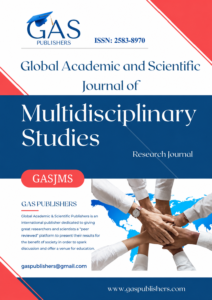
Global Academic and Scientific Journal of Multidisciplinary Studies, 3(10), 10–20.
Mygdanis, Y. (2025). Digital little music makers: Incorporating emerging technologies, immersive practices (AR, VR), artificial intelligence, and STREAM methods into music teaching and learning. Global Academic and Scientific Journal of Multidisciplinary Studies, 3(10), 10–20.
Mygdanis, Y. (2025). Digital little music makers: Incorporating emerging technologies, immersive practices (AR, VR), artificial intelligence, and STREAM methods into music teaching and learning. Global Academic and Scientific Journal of Multidisciplinary Studies, 3(10), 10–20. https://doi.org/10.5281/zenodo.17345926
Recent technological advancements have consistently redefined the ways in which individuals engage with music, fostering novel perspectives on expression, interaction, and learning. Children of the digital age are growing up in environments that expand their musical experiences and preferences, while also posing challenges to music education. This scholarly investigation explores the emergence and evolution of learning environments through the design and implementation of STREAM-based instructional scenarios in primary education. Specifically, it examines the experiences of students in grades three through five and analyzes the utilization of emerging technologies, including music production, ubiquitous and mobile music computing, creative coding, immersive technologies, and artificial intelligence. The intervention was conducted as a music club at a private educational institution over three academic years, each comprising thirty weeks. The research approach was based on Design-Based Research, which integrates theory, design, and practice through iterative cycles aimed at developing and continuously refining authentic learning experiences. The findings indicate that students enhanced their creative expression, autonomy, self-regulation, sensory engagement, and collaborative problem-solving capabilities, while also advancing computational thinking by integrating physical and digital musical realms. Overall, this study advocates for a pedagogically sound, human-centered, and post-digital framework for music education, emphasizing a paradigm shift that aligns with the new perspectives and opportunities presented by the contemporary digital landscape.
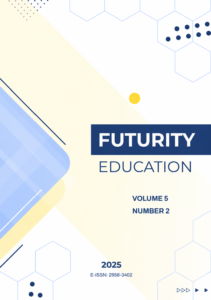
Futurity Education, 5(2), 90–114.
Mygdanis, Y. (2025). Design-based research in music education: Theoretical foundations, methodological perspectives, and practice implications. Futurity Education, 5(2), 90–114.
Mygdanis, Y. (2025). Design-based research in music education: Theoretical foundations, methodological perspectives, and practice implications. Futurity Education, 5(2), 90–114. https://doi.org/10.57125/FED.2025.06.25.05
This article examines the integration of Design-Based Research (DBR) into music education, concentrating on its philosophical underpinnings, methodological features, and its potential to yield transformative educational practices. The study analyzes DBR as a cyclical and iterative process that interweaves design, implementation, and reflection within authentic learning environments through a theory-driven synthesis and methodological literature review. Its originality lies in bridging the rich international discourse on DBR with the underrepresented field of music pedagogy, offering a comprehensive framework that integrates theories such as constructivism, conceptual change, activity theory, and cognitive apprenticeship. The article examines how DBR can inform the design of music learning environments responsive to students’ needs, culturally situated, and pedagogically adaptive. It highlights key challenges—such as the demands of long-term field engagement, the complexity of data management, and questions of generalizability—while emphasizing DBR’s capacity to produce grounded, flexible, and theory-informed solutions. Practical examples from recent studies illustrate its application across diverse musical contexts, including digital composition tools, informal music-making, community-based practices, and teacher education. By framing teaching as a design act and theory as emergent from practice, DBR is presented as a methodology and a dynamic stance toward innovation. It empowers music educators to act as reflective practitioners and co-researchers, supporting sustainable educational change. The article concludes by proposing directions for future research that expand the role of DBR in advancing inclusive, creative, and context-sensitive approaches to music learning.
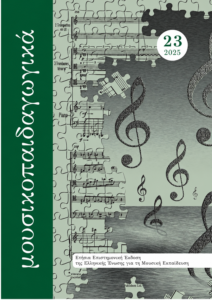
Μουσικοπαιδαγωγικά, 23(1), 50–71.
Μυγδάνης, Γ. (2025). Digital Little Music Makers: αξιοποίηση αναδυόμενων και εμβυθιστικών τεχνολογιών, τεχνητής νοημοσύνης και πρακτικών STREAM στη μουσική διδασκαλία-μάθηση. Μουσικοπαιδαγωγικά, 23(1), 50–71.
Μυγδάνης, Γ. (2025). Digital Little Music Makers: αξιοποίηση αναδυόμενων και εμβυθιστικών τεχνολογιών, τεχνητής νοημοσύνης και πρακτικών STREAM στη μουσική διδασκαλία-μάθηση. Μουσικοπαιδαγωγικά, 23(1), 50–71. https://doi.org/10.12681/musped.45724
Οι τεχνολογικές εξελίξεις των τελευταίων ετών επαναπροσδιορίζουν τους τρόπους με τους οποίους τα άτομα έρχονται σε επαφή με τη μουσική, διαμορφώνοντας νέες δυνατότητες έκφρασης, αλληλεπίδρασης και μάθησης. Τα παιδιά της ψηφιακής εποχής μεγαλώνουν σε περιβάλλοντα που διευρύνουν τις μουσικές τους εμπειρίες, δημιουργώντας παράλληλα προκλήσεις για τη μουσική παιδαγωγική. Η παρούσα έρευνα εξετάζει τη συγκρότηση μαθησιακών περιβαλλόντων μέσα από τον σχεδιασμό και την εφαρμογή STREAM σεναρίων στην πρωτοβάθμια εκπαίδευση, διερευνώντας την εμπειρία μαθητών/τριών Γ’ έως Ε’ Δημοτικού και τη χρήση αναδυόμενων τεχνολογιών —όπως η μουσική παραγωγή, ο διάχυτος και κινητός μουσικός υπολογισμός και η δημιουργική κωδικοποίηση— καθώς και τεχνολογιών εμβύθισης και τεχνητής νοημοσύνης. Η παρέμβαση υλοποιήθηκε ως μουσικός όμιλος σε ιδιωτικό σχολείο και διήρκεσε τρία σχολικά έτη, με τριάντα εβδομάδες ανά κύκλο. Ο μεθοδολογικός σχεδιασμός στηρίχθηκε στην έρευνα σχεδιασμού. Τα ευρήματα δείχνουν ότι οι μαθητές/τριες ανέπτυξαν δημιουργική έκφραση, αυτονομία, αυτορρύθμιση, αισθητηριακή εμπλοκή και συνεργατική επίλυση προβλημάτων, καλλιεργώντας παράλληλα ικανότητες υπολογιστικής σκέψης μέσω της δημιουργικής αξιοποίησης φυσικών και ψηφιακών μουσικών κόσμων. Συνολικά, η μελέτη προτείνει παιδαγωγικά τεκμηριωμένο, ανθρωποκεντρικά προσανατολισμένο και μετα-ψηφιακό πλαίσιο μουσικής διδασκαλίας ως μετατόπιση παραδείγματος που ανταποκρίνεται στις δυνατότητες του σύγχρονου συμφραζομένου.
Στα Πρακτικά του 10ου Διεθνούς Συνεδρίου της Ε.Ε.Μ.Ε. «Μουσική διδασκαλία-μάθηση σε ποικίλα περιβάλλοντα: λειτουργίες, αξίες, αναστοχασμοί».
Μυγδάνης, Γ., & Χρυσοστόμου, Σ. (in press). Σχεδιασμός, ανάπτυξη και υλοποίηση ST(R)EAM σεναρίων για την πρωτοβάθμια μουσική εκπαίδευση υπό το πρίσμα της «Μουσικής Εκπαίδευσης 4.0». Στα Πρακτικά του 10ου Διεθνούς Συνεδρίου της Ε.Ε.Μ.Ε. «Μουσική διδασκαλία-μάθηση σε ποικίλα περιβάλλοντα: λειτουργίες, αξίες, αναστοχασμοί».
Μυγδάνης, Γ., & Χρυσοστόμου, Σ. (in press). Σχεδιασμός, ανάπτυξη και υλοποίηση ST(R)EAM σεναρίων για την πρωτοβάθμια μουσική εκπαίδευση υπό το πρίσμα της «Μουσικής Εκπαίδευσης 4.0». Στα Πρακτικά του 10ου Διεθνούς Συνεδρίου της Ε.Ε.Μ.Ε. «Μουσική διδασκαλία-μάθηση σε ποικίλα περιβάλλοντα: λειτουργίες, αξίες, αναστοχασμοί».
Οι τεχνολογικές εξελίξεις μετασχηματίζουν καθημερινά τον τρόπο με τον οποίο τα παιδιά αλληλεπιδρούν με τη μουσική, διαμορφώνοντας νέες προσδοκίες αλλά και νέες προκλήσεις για τη σχολική μουσική τάξη. Το άρθρο εξετάζει τη μετάβαση προς τη Μουσική Εκπαίδευση 4.0 ως ευρύτερη παιδαγωγική μετατόπιση προς ένα μετα-ψηφιακό και ανθρωποκεντρικά προσανατολισμένο πλαίσιο. Προτείνεται ένα συνεκτικό πλέγμα αρχών και στρατηγικών για τον σχεδιασμό και την υλοποίηση STREAM σεναρίων στην πρωτοβάθμια μουσική εκπαίδευση, με έμφαση στη συνεργατική επίλυση προβλημάτων και στη διαμορφωτική αξιολόγηση. Παρουσιάζονται έξι αλληλοσυνδεόμενοι τεχνολογικοί άξονες που προέκυψαν από έρευνα σχεδιασμού σε τριετή εφαρμογή και ένα ενδεικτικό σενάριο που συνδυάζει μουσική παραγωγή, κατασκευαστική μάθηση, εμβυθιστικές τεχνολογίες, τεχνητή νοημοσύνη και κινητό υπολογισμό, με δυνατότητα προσαρμογής σε διαφορετικά σχολικά συγκείμενα, ανάλογα με τις διαθέσιμες υποδομές, τους πόρους και τις θεσμικές προϋποθέσεις.
In S. Chrysostomou, C. Fanouraki, A. Triantafyllaki, E. Perakaki, & I. Lakidou (Eds.), WAAE Global Arts Education Summit Athens 2024: Arts, nature, technology, education: Harmony in unity. Proceedings. National and Kapodistrian University of Athens Press.
Mygdanis, Y. (2026). Designing and applying educational scenarios reflecting the Music Education 4.0 perspective for primary music school education. In S. Chrysostomou, C. Fanouraki, A. Triantafyllaki, E. Perakaki, & I. Lakidou (Eds.), WAAE Global Arts Education Summit Athens 2024: Arts, nature, technology, education: Harmony in unity. Proceedings. National and Kapodistrian University of Athens Press.
Mygdanis, Y. (2026). Designing and applying educational scenarios reflecting the Music Education 4.0 perspective for primary music school education. In S. Chrysostomou, C. Fanouraki, A. Triantafyllaki, E. Perakaki, & I. Lakidou (Eds.), WAAE Global Arts Education Summit Athens 2024: Arts, nature, technology, education: Harmony in unity. Proceedings. National and Kapodistrian University of Athens Press.
The continuing evolution of technology changes the physical and digital musical worlds, providing new opportunities for expression, interaction, and education. The proliferation of digital media has brought about a paradigm shift, providing expanded learning experiences that deviate from conventional teaching environments. This research delves into the design and development of learning environments in line with the Music Education 4.0 perspective. The primary purpose was to examine the incorporation of immersive technologies (virtual, augmented, and mixed reality) and artificial intelligence through educational scenarios that align with the transdisciplinary ST(R)E(A)M framework (Science, Technology, Reading/Writing, Engineering, Arts, Mathematics) in elementary school music education. The research methodology followed a qualitative Design-Based Research approach. Based on the findings, children demonstrated a keen interest and willingness to participate, facilitating the acquisition of diverse musical and technological proficiencies. From a broader perspective, the current study aims to contribute to the ongoing discourse on the effective integration of emerging technologies and on novel strategies and innovative pedagogical frameworks for incorporating them into music classrooms.

In Constructionism conference proceedings: Making and innovation (pp. 55–67). OAPublishing.
Mygdanis, Y. (2025). Digital little music makers: Designing and implementing an innovative educational music proposal embodying the concept of “making”. In Constructionism conference proceedings: Making and innovation (pp. 55–67). OAPublishing.
Mygdanis, Y. (2025). Digital little music makers: Designing and implementing an innovative educational music proposal embodying the concept of “making”. In Constructionism conference proceedings: Making and innovation (pp. 55–67). OAPublishing. https://doi.org/10.21240/constr/2025/41.X
The evolving landscape of digital technology has transformed music engagement, offering unique opportunities for expression and creative education. In this context, music education is undergoing a significant transformation that challenges traditional teaching models while creating new avenues for creativity, engagement, and learning. This study explores the design and implementation of the “Digital Little Music Makers”, a pedagogical music proposal reflecting a constructionist lens that integrates advanced technologies and innovative teaching strategies – music production, maker movement, coding, AI, and immersive technologies (VR/AR) – and examines the teaching and learning impact of a practical intervention conducted over 30 weeks at Pierce, The American College of Greece. The study adopted a qualitative approach, utilizing a Design-Based Research methodology, and data were collected through semi-structured interviews, field observations, informal discussions, and student-created musical artifacts. The ultimate aim was to investigate how these methodologies integrated within a transdisciplinary STEAM-based perspective could improve students’ musical creativity and collaborative skills. Findings revealed high levels of student engagement, autonomy, and creativity through diverse technological tools and teaching strategies that enabled participants to compose music, build interactive installations, and design immersive experiences. Emerging and immersive technologies fostered hands-on learning, enhancing problem-solving skills and connecting formal and informal music learning beyond the classroom. By positioning students as makers, the intervention appeared to cultivate skills such as computational thinking, artistic expression, and peer collaboration, which are essential for the 21st century. Overall, the study underscores the transformative potential of STEAM-driven and constructionist perspectives in reimagining and redefining music education through technology-enhanced creativity, challenging traditional teaching methods by emphasizing learning through “making” as a catalyst for an educational paradigm shift.
In W. Brooks & M. M. DeAmbrose (Eds.), Proceedings of the ISME Music in Schools and Teacher Education Commission (pp. 125–141). ISME.
Mygdanis, Y. (2024). Designing and implementing a STEAM proposal reflecting ubiquitous acoustic ecologies for connecting music and maritime. In W. Brooks & M. M. DeAmbrose (Eds.), Proceedings of the ISME Music in Schools and Teacher Education Commission (pp. 125–141). ISME.
Mygdanis, Y. (2024). Designing and implementing a STEAM proposal reflecting ubiquitous acoustic ecologies for connecting music and maritime. In W. Brooks & M. M. DeAmbrose (Eds.), Proceedings of the ISME Music in Schools and Teacher Education Commission (pp. 125–141). ISME.
The sounds surrounding us significantly impact our daily lives, influencing the ways we interact with the environment. Advancements in technology have revolutionized our relationship with music and sound, leading to the emergence of new and diverse forms of expression, creation, and learning. Research about the soundscape in the scope of acoustic ecologies has led to a deep comprehension and appreciation of sound, particularly within its environmental and contextual settings. This study proposes the design, development, and practical application of an interdisciplinary approach that integrates music with maritime studies to create immersive learning experiences reflecting ubiquitous acoustic ecologies. The intervention took place at Pierce – The American College of Greece Elementary School and focused on fifth and sixth-grade classes. It utilized hands-on activities based on the STEAM model, which emphasized collaboration, inquiry-based learning, and project-based learning to create authentic and meaningful music learning environments. The findings revealed that the activities provided novel experiences for the students, who were eager and enthusiastic participants, acquiring new musical and technological skills and experiences while augmenting their creativity and ecological awareness.
Στο Ι. Καζανίδη & Α. Τσινάκο (Επιμ.), Πρακτικά Εργασιών 13ου Πανελλήνιου και Διεθνούς Συνεδρίου «Οι ΤΠΕ στην Εκπαίδευση» (σσ. 380–387). ΕΤΠΕ.
Μυγδάνης, Γ. (2024). «Little music makes & producers»: σχεδίαση και εφαρμογή καινοτόμου διδακτικής τεχνολογικής-μουσικής πρότασης στην πρωτοβάθμια εκπαίδευση για την ενίσχυση της δημιουργικότητας. Στο Ι. Καζανίδη & Α. Τσινάκο (Επιμ.), Πρακτικά Εργασιών 13ου Πανελλήνιου και Διεθνούς Συνεδρίου «Οι ΤΠΕ στην Εκπαίδευση» (σσ. 380–387). ΕΤΠΕ.
Μυγδάνης, Γ. (2024). «Little music makes & producers»: σχεδίαση και εφαρμογή καινοτόμου διδακτικής τεχνολογικής-μουσικής πρότασης στην πρωτοβάθμια εκπαίδευση για την ενίσχυση της δημιουργικότητας. Στο Ι. Καζανίδη & Α. Τσινάκο (Επιμ.), Πρακτικά Εργασιών 13ου Πανελλήνιου και Διεθνούς Συνεδρίου «Οι ΤΠΕ στην Εκπαίδευση» (σσ. 380–387). ΕΤΠΕ.
Η ραγδαία εξέλιξη της τεχνολογίας τα τελευταία χρόνια έχει μεταμορφώσει τους τρόπους που οι άνθρωποι αλληλεπιδρούν με τη μουσική, δημιουργώντας προϋποθέσεις για νέες μορφές μουσικής δημιουργίας, έκφρασης και μάθησης. Τα παιδιά μεγαλώνουν σε ένα ψηφιακό περιβάλλον και αποκτούν τεχνολογικές δεξιότητες συνυφασμένες με τις μουσικές τους εμπειρίες, τις οποίες αναμένουν να αξιοποιήσουν και στη μουσική τάξη. Με αυτόν τον τρόπο, οι εκπαιδευτικοί θα πρέπει να αναστοχαστούν και να επανεξετάσουν τις μορφές ενσωμάτωσης των ψηφιακών μέσων στις διαδικασίες διδασκαλίας-μάθησης στη βάση των αναγκών των μαθητών τους για συμμετοχή σε τεχνολογικές παιδαγωγικές δραστηριότητες. Το παρόν άρθρο συζητά τα αποτελέσματα πιλοτικής παρέμβασης σε μία ομάδα είκοσι παιδιών (Γ’ – Ε’ τάξης) στο δημοτικό σχολείο του Pierce – The American College of Greece. Για διάστημα τριάντα εβδομάδων, εφαρμόστηκαν μουσικοπαιδαγωγικά σενάρια που αντλούσαν από το διεπιστημονικό μοντέλο STEAM, μέσα από διαδικασίες μουσικής παραγωγής, διάχυτου μουσικού υπολογισμού, στρατηγικές κωδικοποίησης, maker movement και συνεργατικές πρακτικές DIY. Τα ευρήματα καταδεικνύουν ότι οι νεαροί μαθητές αγκάλιασαν τις δραστηριότητες με ενθουσιασμό και ενεπλάκησαν με ενεργό και δημιουργικό τρόπο στις διαδικασίες. Φάνηκε ότι το νέο μαθησιακό περιβάλλον ενίσχυσε τις μουσικές και τεχνολογικές τους δεξιότητες, διαμορφώνοντας νέες εμπειρίες, ανοίγοντας νέους δρόμους στη μουσική εκπαίδευση.
Δεν βρέθηκαν αποτελέσματα.
Περισσότερα στοιχεία για το ερευνητικό και συγγραφικό έργο, τις δημοσιεύσεις και τις βιβλιογραφικές αναφορές είναι διαθέσιμα μέσω των ακόλουθων πλατφορμών.
 Google ScholarΔημοσιεύσεις και βιβλιογραφικές αναφορές
 ResearchGateΕρευνητικό προφίλ και διαθέσιμες δημοσιεύσεις
 AcademiaΔημοσιεύσεις και ακαδημαϊκό υλικό
Το ORCID παρέχει ένα μόνιμο και μοναδικό αναγνωριστικό ερευνητή.
Προφορικές και αναρτημένες ανακοινώσεις σε συνέδρια, κεντρικές ομιλίες, προσκεκλημένες διαλέξεις και εργαστήρια του Γιάννη Μυγδάνη. Οι εγγραφές περιλαμβάνουν τίτλο, συντελεστές, στοιχεία διοργάνωσης και περίληψη, μαζί με το διαθέσιμο πρόγραμμα ή συνοδευτικό υλικό. Αναζητήστε μια συμμετοχή ανά είδος ή έτος και δείτε τη σε συνοπτική μορφή ή ως αναφορά APA.
11 αποτελέσματα
33rd EAS Conference 2026 — Advance Democracy. Participation, Diversity, and Social Cohesion in Music Education8–11 April 2026Vienna, Austria
Mygdanis, Y. (2026). Music Education 4.0: The Emergence of a Holistic, Human-Centered, Post-Digital Pedagogical Model Advancing Democratic, Inclusive, and Diverse Music Education [Paper presentation]. 33rd EAS Conference 2026 — Advance Democracy. Participation, Diversity, and Social Cohesion in Music Education, 8–11 April 2026, Vienna, Austria.
Mygdanis, Y. (2026, April 8–11). Music Education 4.0: The Emergence of a Holistic, Human-Centered, Post-Digital Pedagogical Model Advancing Democratic, Inclusive, and Diverse Music Education [Paper presentation]. 33rd EAS Conference 2026 — Advance Democracy. Participation, Diversity, and Social Cohesion in Music Education, Vienna, Austria.
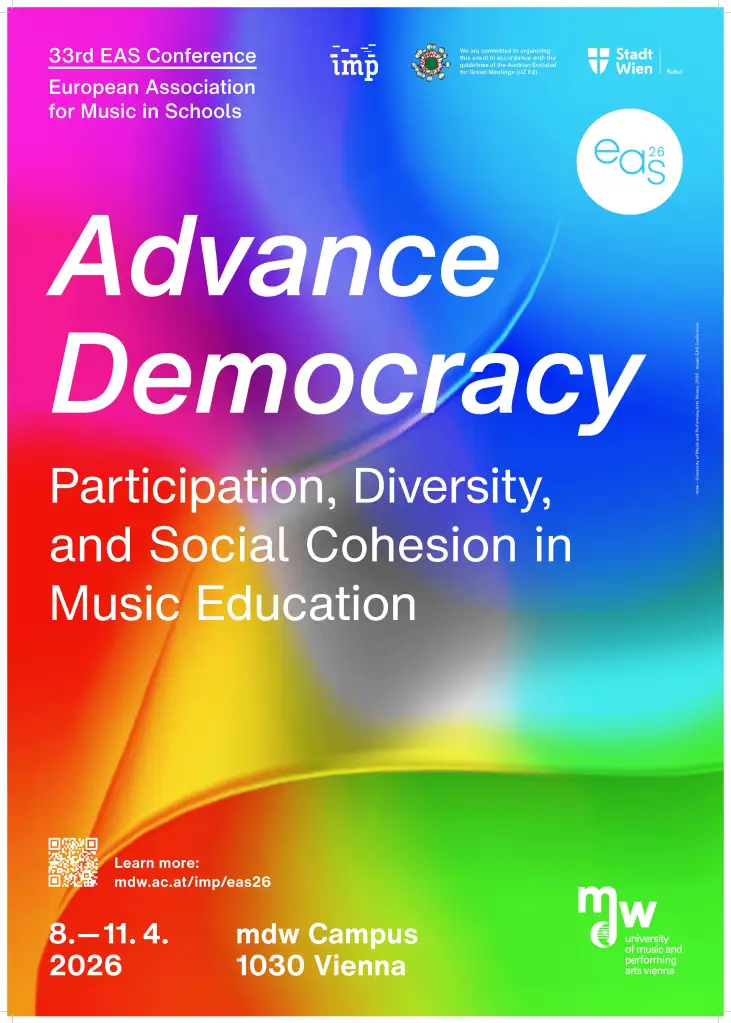
This paper presents the formation of the Music Education 4.0 framework, which emerged as a local theory from a three-year Design-Based Research initiative conducted in a private elementary school in Greece. Through iterative cycles of design, implementation, analysis, and redesign, the study aimed to develop a coherent, human-centered, and post-digital perspective on music learning that integrates emerging and immersive technologies, artificial intelligence, and the pedagogical principles of STREAM education. Cross-cycle analysis identified four interconnected dimensions of learning that accounted for students’ engagement and development—creative autonomy, collaborative problem-solving, computational thinking, and sensory-emotional immersion. These were underpinned by transversal mechanisms of learning through artifacts, embodied engagement, meta-narration, and mediated collaboration, which together functioned as analytic categories and design drivers for subsequent iterations. Building on these mechanisms, a coherent set of actionable design heuristics was established, including participatory co-creation and role rotation, multimodal making for public audiences, scaffolded progression with gradual fading, authentic tasks and process documentation, artifact-based assessment through co-created rubrics, and the cultivation of critical post-digital literacy. Grounded in constructivism and constructionism, sociocultural theory, cognitive apprenticeship, pragmatism, conceptual change, and creative learning, Music Education 4.0 articulates a coherent set of design principles and practical heuristics for curriculum design, assessment, and classroom orchestration. The framework reconceptualizes the learner as an active agent and the teacher as a designer-researcher, positioning physical-digital hybridity as a catalyst for inclusive participation and deeper musical understanding. In conclusion, the paper highlights implications for curriculum development—through the integration of making-centered, STREAM-aligned learning sequences—teacher education—through design inquiry and reflective iteration—and school-based innovation—by emphasizing scalable design patterns. It further outlines directions for the continued validation and contextual adaptation of the framework, contributing to broader discourses on participation, inclusion, and social cohesion in contemporary music education.
10ο Διεθνές Συνέδριο ΕΕΜΕ — «Μουσική διδασκαλία-μάθηση σε ποικίλα περιβάλλοντα: λειτουργίες, αξίες, αναστοχασμοί»31 Οκτωβρίου–2 Νοεμβρίου 2025Κέρκυρα, Ελλάδα
Μυγδάνης, Γ., & Χρυσοστόμου, Σ. (2025). Σχεδιασμός, ανάπτυξη και υλοποίηση ST(R)EAM σεναρίων για την πρωτοβάθμια μουσική εκπαίδευση υπό το πρίσμα της Μουσικής Εκπαίδευσης 4.0 [Προφορική ανακοίνωση]. 10ο Διεθνές Συνέδριο ΕΕΜΕ — «Μουσική διδασκαλία-μάθηση σε ποικίλα περιβάλλοντα: λειτουργίες, αξίες, αναστοχασμοί», 31 Οκτωβρίου–2 Νοεμβρίου 2025, Κέρκυρα, Ελλάδα.
Μυγδάνης, Γ., & Χρυσοστόμου, Σ. (2025, 31 Οκτωβρίου–2 Νοεμβρίου). Σχεδιασμός, ανάπτυξη και υλοποίηση ST(R)EAM σεναρίων για την πρωτοβάθμια μουσική εκπαίδευση υπό το πρίσμα της Μουσικής Εκπαίδευσης 4.0 [Προφορική ανακοίνωση]. 10ο Διεθνές Συνέδριο ΕΕΜΕ — «Μουσική διδασκαλία-μάθηση σε ποικίλα περιβάλλοντα: λειτουργίες, αξίες, αναστοχασμοί», Κέρκυρα, Ελλάδα.
Οι τεχνολογικές εξελίξεις μετασχηματίζουν καθημερινά τους τρόπους με τους οποίους οι άνθρωποι αλληλεπιδρούν με τη μουσική, δημιουργώντας νέες μορφές έκφρασης, δημιουργίας και μάθησης (Mygdanis & Kokkidou, 2021). Τα παιδιά της ψηφιακής εποχής αποκτούν από μικρή ηλικία διευρυμένες ψηφιακές-μουσικές εμπειρίες (Leong, 2012), τις οποίες αναμένουν να συναντήσουν στη μουσική τάξη (Tobias, 2017). Μέσα από τις νέες δυνατότητες και τις προκλήσεις που αναδύονται στη διδασκαλία-μάθηση, διαμορφώνεται η προοπτική της Εκπαίδευσης 4.0, όπου οι αναδυόμενες τεχνολογίες διαμορφώνουν ένα μαθησιακό πλαίσιο ριζικά διαφορετικό από τα συμβατικά (Halili, 2019). Η παρούσα έρευνα εξετάζει τη διαμόρφωση μαθησιακών περιβαλλόντων υπό το πρίσμα της Μουσικής Εκπαίδευσης 4.0, μέσα από τον σχεδιασμό και την υλοποίηση διεπιστημονικών ST(R)EAM σεναρίων στην πρωτοβάθμια εκπαίδευση. Απώτερος σκοπός είναι η διερεύνηση των εμπειριών μέσα από την αξιοποίηση εμβυθιστικών τεχνολογιών (εικονική & επαυξημένη πραγματικότητα) και τεχνητής νοημοσύνης (ΤΝ) στη μουσική διδασκαλία-μάθηση. Η πρακτική εφαρμογή πραγματοποιήθηκε σε μουσικό όμιλο ιδιωτικού σχολείου στην Αθήνα, διήρκεσε 25 εβδομάδες και περιλάμβανε 23 μαθητές/τριες Γ’ έως Ε’ τάξης. Οι δραστηριότητες συνδύαζαν πρακτικές μουσικής παραγωγής, κωδικοποίησης, maker movement, τεχνολογίες εμβύθισης και ΤΝ. Η μελέτη ακολούθησε την ποιοτική προσέγγιση της «Έρευνας με Βάση τον Σχεδιασμό» (Design-Based Research), εστιάζοντας στον σχεδιασμό, την ανάπτυξη και την αξιολόγηση παρεμβάσεων σε αυθεντικά πλαίσια (Barab & Squire, 2016). Για τη συλλογή δεδομένων αξιοποιήθηκαν ημιδομημένες συνεντεύξεις, καταγραφή παρατηρήσεων, άτυπες συζητήσεις και portfolios μαθητών/τριών. Τα ευρήματα αναδεικνύουν την προστιθέμενη αξία του σχεδιασμού και της ενσωμάτωσης πρακτικών και στρατηγικών στην προοπτική της Μουσικής Εκπαίδευσης 4.0. Τα παιδιά επέδειξαν έντονο ενδιαφέρον και ενθουσιασμό για τη συμμετοχή στις διαδικασίες. Το μαθησιακό περιβάλλον που διαμορφώθηκε ενίσχυσε τις μουσικές και τεχνολογικές τους δεξιότητες, καλλιεργώντας παράλληλα δεξιότητες του 21ου αιώνα, όπως η κριτική σκέψη, η συνεργατικότητα, η δημιουργικότητα και η ικανότητα επίλυσης προβλημάτων. Συνολικά, τα αποτελέσματα καταδεικνύουν την καθοριστική σημασία της ανάπτυξης και της εφαρμογής τεχνολογικών-μουσικοπαιδαγωγικών σεναρίων, συμβάλλοντας στη δημιουργία καινοτόμων μαθησιακών πλαισίων που αντανακλούν τους σύγχρονους ψηφιακούς και πολυτροπικούς μουσικούς γραμματισμούς. Σε μια συνολική προοπτική, αξίζει να τονιστεί η ανάγκη κριτικής προσέγγισης ως προς την προσβασιμότητα των τεχνολογικών εργαλείων. Αν και τα συγκεκριμένα σενάρια δεν προϋποθέτουν υψηλές τεχνικές απαιτήσεις, η ένταξη αναδυόμενων τεχνολογιών ενδέχεται να περιορίσει την ευρεία εφαρμογή τους, εάν δεν διασφαλιστούν η ανοικτότητα και η προσαρμοστικότητα στη μουσική τάξη.
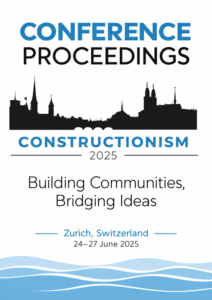
Constructionism Conference 2025 — Building Communities, Bridging Ideas24–27 June 2025Zurich, Switzerland
Mygdanis, Y. (2025). Digital Little Music Makers: Designing and Implementing an Innovative Educational Music Proposal Embodying the Concept of ‘Making’ [Paper presentation]. Constructionism Conference 2025 — Building Communities, Bridging Ideas, 24–27 June 2025, Zurich, Switzerland.
Mygdanis, Y. (2025, June 24–27). Digital Little Music Makers: Designing and Implementing an Innovative Educational Music Proposal Embodying the Concept of ‘Making’ [Paper presentation]. Constructionism Conference 2025 — Building Communities, Bridging Ideas, Zurich, Switzerland.
The evolving landscape of digital technology has transformed musical engagement, creating new opportunities for expression, creativity, and learning. In this context, music education is undergoing a significant transformation that challenges established teaching models and expands the possibilities for participation and creative practice. This study explores the design and implementation of “Digital Little Music Makers,” a music-education proposal grounded in a constructionist perspective and integrating music production, maker practices, coding, artificial intelligence, and immersive technologies (VR/AR). It examines the pedagogical implications of these approaches through a practical intervention conducted over 30 weeks at Pierce – The American College of Greece. The study focuses on how technologically mediated making can support musical creativity, active participation, collaboration, and the development of new musical and digital literacies within an elementary school context.
10th WAAE Global Arts Education Summit — Arts, Nature, Technology, Education: Harmony in Unity17–19 October 2024Athens, Greece
Mygdanis, Y. (2024). Designing and applying educational scenarios reflecting the Music Education 4.0 perspective for primary music school education [Conference presentation]. 10th WAAE Global Arts Education Summit — Arts, Nature, Technology, Education: Harmony in Unity, 17–19 October 2024, Athens, Greece.
Mygdanis, Y. (2024, October 17–19). Designing and applying educational scenarios reflecting the Music Education 4.0 perspective for primary music school education [Conference presentation]. 10th WAAE Global Arts Education Summit — Arts, Nature, Technology, Education: Harmony in Unity, Athens, Greece.
The continuing evolution of technology is reshaping physical and digital musical worlds, creating new opportunities for expression, interaction, and education. The proliferation of digital media has contributed to a shift towards expanded learning experiences that extend beyond conventional teaching environments. This research examines the design and development of learning environments in line with the Music Education 4.0 perspective. The primary purpose was to examine the incorporation of immersive technologies (virtual, augmented, and mixed reality) and artificial intelligence through educational scenarios that align with the transdisciplinary ST(R)E(A)M framework (Science, Technology, Reading/Writing, Engineering, Arts, Mathematics), in elementary school music education. The research methodology followed a qualitative Design-Based Research approach. The findings indicate that children demonstrated a keen interest and willingness to participate, while developing a range of musical and technological proficiencies. More broadly, the study contributes to ongoing discussion of how emerging technologies can be integrated effectively into music classrooms through innovative pedagogical strategies and frameworks.
36th World Conference of the International Society for Music Education (ISME) — Advocacy for Sustainability in Music Education28 July–2 August 2024Helsinki, Finland
Mygdanis, Y., & Chrysostomou, S. (2024). Designing, applying and researching immersive technologies and artificial intelligence in a Music Education 4.0 perspective in primary education [Conference presentation]. 36th World Conference of the International Society for Music Education (ISME) — Advocacy for Sustainability in Music Education, 28 July–2 August 2024, Helsinki, Finland.
Mygdanis, Y., & Chrysostomou, S. (2024, July 28–August 2). Designing, applying and researching immersive technologies and artificial intelligence in a Music Education 4.0 perspective in primary education [Conference presentation]. 36th World Conference of the International Society for Music Education (ISME) — Advocacy for Sustainability in Music Education, Helsinki, Finland.
Recent technological advancements continue to reshape the ways in which people experience music, creating new possibilities for musical expression, interaction, and learning. Children growing up in the digital age encounter an expanding range of musical experiences and preferences. As digital media transform perceptions of musical praxis and generate new forms of meaning-making, music education faces significant challenges in designing learning environments that respond to these developments. This research investigates the emergence and development of learning environments within the framework of Music Education 4.0. Its main objective is to design and implement teaching scenarios aligned with the interdisciplinary ST(R)E(A)M framework (Science, Technology, Reading/Writing, Engineering, Arts, and Mathematics) in primary education. The study focuses on the experiences of fourth- and fifth-grade elementary school students and examines the integration of immersive technologies—virtual, augmented, and mixed reality—and artificial intelligence into these learning environments. The intervention was carried out at a private elementary school in Athens, Greece, over a period of twenty weeks. Twenty students, evenly distributed between the fourth and fifth grades, participated in the study. The qualitative methodology draws on Design-Based Research, emphasizing the design, development, implementation, and evaluation of an educational intervention in authentic teaching and learning settings. Four data-collection techniques were employed: semi-structured focus-group interviews with students, observations by the teacher-researcher, informal discussions within and outside the classroom, and analysis of the children’s music-technological creations. The anticipated contribution of the research is to broaden understanding of how Music Education 4.0 teaching scenarios can be designed by integrating immersive technologies and artificial intelligence within an ST(R)E(A)M context. At the same time, the use of Design-Based Research opens new methodological perspectives for research in music education.
ISME MISTEC International Preconference Seminar — Sustaining and Building Resilience in Music Education22–26 July 2024Tallinn, Estonia
Mygdanis, Y. (2024). Designing and implementing a STEAM proposal reflecting ubiquitous acoustic ecologies for connecting music and maritime [Conference presentation]. ISME MISTEC International Preconference Seminar — Sustaining and Building Resilience in Music Education, 22–26 July 2024, Tallinn, Estonia.
Mygdanis, Y. (2024, July 22–26). Designing and implementing a STEAM proposal reflecting ubiquitous acoustic ecologies for connecting music and maritime [Conference presentation]. ISME MISTEC International Preconference Seminar — Sustaining and Building Resilience in Music Education, Tallinn, Estonia.
The sounds surrounding us significantly impact our daily lives, influencing the ways we interact with the environment. Advancements in technology have revolutionized our relationship with music and sound, leading to the emergence of new and diverse forms of expression, creation, and learning. Research on soundscapes within acoustic ecology has contributed to a deeper understanding and appreciation of sound, particularly within its environmental and contextual settings. This study proposes the design, development, and practical application of an interdisciplinary approach that integrates music with maritime studies to create immersive learning experiences reflecting ubiquitous acoustic ecologies. The intervention took place at Pierce – The American College of Greece Elementary School and focused on fifth- and sixth-grade students. It utilized hands-on activities based on the STEAM model, which emphasized collaboration, inquiry-based learning, and project-based learning to create authentic and meaningful music learning environments. The findings revealed that the activities provided novel experiences for the students, who were eager and enthusiastic participants, developing new musical and technological skills while broadening their learning experiences and enhancing their creativity and ecological awareness.
13ο Πανελλήνιο και Διεθνές Συνέδριο «Οι ΤΠΕ στην Εκπαίδευση»29 Σεπτεμβρίου–1 Οκτωβρίου 2023Καβάλα, Ελλάδα
Μυγδάνης, Γ. (2023). «Little music makers & producers»: Σχεδίαση και εφαρμογή καινοτόμου διδακτικής τεχνολογικής-μουσικής πρότασης στην πρωτοβάθμια εκπαίδευση για την ενίσχυση της δημιουργικότητας [Προφορική ανακοίνωση]. 13ο Πανελλήνιο και Διεθνές Συνέδριο «Οι ΤΠΕ στην Εκπαίδευση», 29 Σεπτεμβρίου–1 Οκτωβρίου 2023, Καβάλα, Ελλάδα.
Μυγδάνης, Γ. (2023, 29 Σεπτεμβρίου–1 Οκτωβρίου). «Little music makers & producers»: Σχεδίαση και εφαρμογή καινοτόμου διδακτικής τεχνολογικής-μουσικής πρότασης στην πρωτοβάθμια εκπαίδευση για την ενίσχυση της δημιουργικότητας [Προφορική ανακοίνωση]. 13ο Πανελλήνιο και Διεθνές Συνέδριο «Οι ΤΠΕ στην Εκπαίδευση», Καβάλα, Ελλάδα.
Η ραγδαία εξέλιξη της τεχνολογίας τα τελευταία χρόνια έχει μεταμορφώσει τους τρόπους που οι άνθρωποι αλληλεπιδρούν με τη μουσική, δημιουργώντας προϋποθέσεις για νέες μορφές μουσικής δημιουργίας, έκφρασης και μάθησης. Τα παιδιά μεγαλώνουν σε ένα ψηφιακό περιβάλλον και αποκτούν τεχνολογικές δεξιότητες συνυφασμένες με τις μουσικές τους εμπειρίες, τις οποίες αναμένουν να αξιοποιήσουν και στη μουσική τάξη. Με αυτόν τον τρόπο, οι εκπαιδευτικοί θα πρέπει να αναστοχαστούν και να επανεξετάσουν τις μορφές ενσωμάτωσης των ψηφιακών μέσων στις διαδικασίες διδασκαλίας-μάθησης στη βάση των αναγκών των μαθητών τους για συμμετοχή σε τεχνολογικές παιδαγωγικές δραστηριότητες. Το παρόν άρθρο συζητά τα αποτελέσματα πιλοτικής παρέμβασης σε μία ομάδα είκοσι παιδιών (Γ’ – Ε’ τάξης) στο δημοτικό σχολείο του Pierce – The American College of Greece. Για διάστημα τριάντα εβδομάδων, εφαρμόστηκαν μουσικοπαιδαγωγικά σενάρια που αντλούσαν από το διεπιστημονικό μοντέλο STEAM, μέσα από διαδικασίες μουσικής παραγωγής, διάχυτου μουσικού υπολογισμού, στρατηγικές κωδικοποίησης, maker movement και συνεργατικές πρακτικές DIY. Τα ευρήματα καταδεικνύουν ότι οι νεαροί μαθητές αγκάλιασαν τις δραστηριότητες με ενθουσιασμό και ενεπλάκησαν με ενεργό και δημιουργικό τρόπο στις διαδικασίες. Φάνηκε ότι το νέο μαθησιακό περιβάλλον ενίσχυσε τις μουσικές και τεχνολογικές τους δεξιότητες, διαμορφώνοντας νέες εμπειρίες, ανοίγοντας νέους δρόμους στη μουσική εκπαίδευση.
30th EAS Conference and 9th ISME European Regional Conference24–27 May 2023Lyon, France
Mygdanis, Y. (2023). “Little music makers & producers”: Designing and integrating technological-musical educational scenarios for musical creativity development in an elementary school in Greece [Conference presentation]. 30th EAS Conference and 9th ISME European Regional Conference, 24–27 May 2023, Lyon, France.
Mygdanis, Y. (2023, May 24–27). “Little music makers & producers”: Designing and integrating technological-musical educational scenarios for musical creativity development in an elementary school in Greece [Conference presentation]. 30th EAS Conference and 9th ISME European Regional Conference, Lyon, France.
The rapid evolution of emerging technologies over recent years has transformed the ways in which people interact and engage with music, expanding opportunities for musical creation, expression, learning, and education. Children grow up in digital environments and acquire technological skills that are intertwined with their musical experiences and that they may later expect to use in the music classroom. From an expanded educational perspective, digital media and emerging technologies can support the development of new technological-musical learning environments. Current research has indicated their positive potential for cultivating musical creativity and fostering equity in music classrooms. Accordingly, music educators need to reconsider how digital media are incorporated into teaching and learning in relation to students’ needs for participation in technology-mediated pedagogical activities. This presentation discusses the results of a pilot intervention at the elementary school of Pierce – The American College of Greece, involving eighteen children from Grades 3–5 in innovative technological approaches to music learning. Over a period of twenty weeks, music-education scenarios were designed and implemented drawing on music production techniques, ubiquitous music computing, the Internet of Musical Things, STEAM and maker practices, and collaborative DIY activities. The primary aim was to investigate how these practices could cultivate students’ musical creativity and to examine the knowledge, skills, and experiences they acquired. Particular attention was given to understanding how students participated actively in the teaching and learning processes. Findings from observations, semi-structured interviews, informal discussions, written formative assessment, and portfolios revealed that students embraced the activities enthusiastically and engaged in music-making as active agents. Overall, participants reported that the learning environment enhanced their engagement and transformed their experiences, suggesting new pathways for music education within the emerging digital musical landscape.
Hybrid Horizons — Festival & Conference16–18 October 2026Athens, Greece
Mygdanis, Y. (2026). Composition Techniques in Elementary General Music Education through a Music Education 4.0 Lens [Poster presentation]. Hybrid Horizons — Festival & Conference, 16–18 October 2026, Athens, Greece.
Mygdanis, Y. (2026, October 16–18). Composition Techniques in Elementary General Music Education through a Music Education 4.0 Lens [Poster presentation]. Hybrid Horizons — Festival & Conference, Athens, Greece.
Composition is already established as a core area of learning within elementary general music curricula, while contemporary musical practice increasingly unfolds across post-digital and hybrid environments in which acoustic sound, digital media, code, interfaces, immersive technologies, and generative systems intersect. These developments broaden the processes, materials, interactions, and environments through which composing can be understood and enacted in school music. The purpose of this paper is to propose and critically discuss a pedagogical mapping of contemporary composition practices and techniques through the Music Education 4.0 framework. Drawing on scholarship in composition pedagogy, post-digital music education, and technology-mediated musical creativity, together with documented research and classroom-based applications in which these practices have been implemented and examined across authentic elementary general music settings, the paper organizes them according to modes of compositional practice and thinking rather than specific technologies. These include the transformation and organization of sonic material; creative and computational approaches to compositional problem solving; embodied and interactive composition; spatial and environmental organization of sound; and generative and AI-mediated compositional processes. They are illustrated through sound-based and electroacoustic composition, sampling and remix, creative coding and algorithmic processes, tangible and sensor-mediated systems, immersive and spatial environments, and AI-mediated composition. Through a post-digital and human-centered Music Education 4.0 lens, these practices are considered in relation to compositional agency, creative problem solving, computational thinking in composition, reflective decision-making, iterative experimentation, and critical post-digital literacy. The paper proposes an expanded pedagogical understanding of composition in which students organize and transform musical material while also designing, testing, and critically evaluating the conditions, rules, interactions, and systems through which musical outcomes emerge, retaining responsibility for their compositional decisions.
Mapping Music Education Research: Psychology, Sociology and Research Methods — BIP Athens 202620 February–23 May 2026Athens, Greece
Mygdanis, Y. (2026). Mapping Music Education 4.0: A Post-Digital, Anthropocentric Music-Educational Framework Integrating Emerging and Immersive Technologies, AI, and STREAM Strategies [Invited lecture]. Mapping Music Education Research: Psychology, Sociology and Research Methods — BIP Athens 2026, 20 February–23 May 2026, Athens, Greece.
Mygdanis, Y. (2026, February 20–May 23). Mapping Music Education 4.0: A Post-Digital, Anthropocentric Music-Educational Framework Integrating Emerging and Immersive Technologies, AI, and STREAM Strategies [Invited lecture]. Mapping Music Education Research: Psychology, Sociology and Research Methods — BIP Athens 2026, Athens, Greece.
This presentation examines the transformative potential of Music Education 4.0 within a post-digital, anthropocentric framework. Instead of perceiving technology as the primary catalyst of change, the framework regards emerging and immersive tools as resources that enhance human agency, musical meaning-making, and culturally and socially grounded learning. From this perspective, Music Education 4.0 revisits traditional pedagogical approaches through immersive, interactive, and reflective learning experiences, aligned with STREAM strategies that promote cross-disciplinary thinking and the development of communication, creativity, and critical judgment. Music Education 4.0 establishes a foundational framework for an extended, adaptable learning ecology in which learners engage with music through embodied participation and iterative experimentation. Students investigate digital music production to compose, remix, and refine musical ideas, while maker-oriented practices encourage hands-on building, prototyping, and redesign of instruments and sound artifacts, thereby enhancing creativity and problem-solving skills. Programming and immersive environments, such as virtual reality (VR) and augmented reality (AR), can further enhance spatial, musical, and conceptual comprehension through situated exploration and interactive scenarios. Concurrently, AI-enabled tools—ranging from generative music systems to personalized assistants—provide timely and responsive feedback and scaffolding, supporting differentiated learning pathways while emphasizing questions of authorship, accountability, and ethical use that are integral to post-digital educational contexts. Participants will explore current developments in the fields of Music, Technology, and Education through the analysis of real-world and authentic case studies and recent research findings. The discussion also considers how post-digital conditions shape both opportunities and challenges in music teacher education. The session further highlights how STREAM strategies can effectively integrate arts and sciences, allowing educators to create comprehensive, context-aware learning experiences that are explicitly centered on human values, critically informed, and adaptable to swiftly changing musical and technological environments.
Mapping Music Education Research: Psychology, Sociology and Research Methods — BIP Oldenburg 20251 February–23 May 2025Germany
Mygdanis, Y. (2025). Music Education 4.0: Shaping a new technocentric music-educational framework incorporating emerging technologies, AI, and ST(R)EAM practices [Invited lecture]. Mapping Music Education Research: Psychology, Sociology and Research Methods — BIP Oldenburg 2025, 1 February–23 May 2025, Online.
Mygdanis, Y. (2025, February 1–May 23). Music Education 4.0: Shaping a new technocentric music-educational framework incorporating emerging technologies, AI, and ST(R)EAM practices [Invited lecture]. Mapping Music Education Research: Psychology, Sociology and Research Methods — BIP Oldenburg 2025, Online.
This presentation examines the transformative potential of Music Education 4.0, a framework that incorporates various technological and pedagogical dimensions—such as music production, the maker movement, programming, virtual reality (VR), augmented reality (AR), and artificial intelligence (AI)—into a new educational mindset. Music Education 4.0 reimagines traditional music teaching by integrating immersive, interactive, and technology-driven learning experiences. Aligned with the ST(R)EAM model, this approach fosters cross-disciplinary learning and the development of communication, creativity, and critical-thinking skills. Music Education 4.0 establishes the basis for an extended, dynamic, and immersive learning framework. Students engage in digital music production, using software to compose, remix, and refine their musical ideas. Concurrently, the maker movement promotes hands-on instrument creation, encouraging both creativity and problem-solving skills. Programming and immersive technologies, such as VR and AR, enhance spatial and musical understanding through interactive coding and virtual environments. Additionally, AI tools such as generative music models and personalised assistants provide tailored, responsive feedback, making the learning experience more adaptive and engaging. This approach aligns with students’ needs and fosters a deeper exploration of music. Participants will explore current developments at the intersection of music, technology, and education through real-world case studies and recent research findings. The session will also emphasise the role of the ST(R)EAM model in integrating arts and technology and in developing a comprehensive skill set for an evolving musical and technological landscape.
Δεν βρέθηκαν αποτελέσματα.